
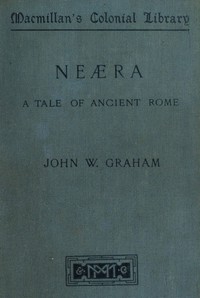
Neæra: A Tale of Ancient Rome by active 1886-1887 John W. Graham
Have you ever read a historical novel that felt more personal than pageant? That's Neæra for you. Published in the late 1880s by John W. Graham, it's a story that has somehow avoided becoming a dusty classic, and that's a shame, because it feels incredibly immediate.
The Story
The plot follows Caius, a young Roman from a good family who is being groomed for a public career. He’s set to marry well and climb the ladder. But his past holds a secret: a deep, formative connection with a woman named Neæra, who exists outside the strict social order he’s meant to uphold. Just as his future seems set, Neæra reappears. Her presence threatens his engagement, his family's honor, and his entire place in society. The book becomes a tightrope walk as Caius tries to navigate his obligations while being drawn back to a relationship that defies every convention. It’s less about gladiators and emperors, and more about the quiet, devastating cost of living a lie.
Why You Should Read It
What grabbed me was Graham’s focus on internal conflict. Caius isn’t a superhero; he’s a flawed, relatable guy trapped by expectations. You feel his panic and his longing. Neæra herself is fascinating—she’s not just a plot device, but a compelling character with her own agency. Graham uses the rigid structure of Roman class and gender roles as a pressure cooker, making every private conversation feel dangerous. The historical detail is there, but it serves the characters, never overwhelming them. It’s a story about identity, and that theme is timeless.
Final Verdict
This book is perfect for readers who love historical settings but crave intimate, character-driven stories. If you enjoyed the personal stakes in books like I, Claudius or the moral dilemmas in some of Steven Saylor’s work, you’ll find a lot to love here. It’s also a great pick for anyone who thinks 19th-century novels are all dense prose—Graham’s style is direct and engaging. Neæra is a compelling, human-scale drama that proves some struggles, no matter how ancient the setting, are always fresh.
The copyright for this book has expired, making it public property. Thank you for supporting open literature.
Matthew Jackson
4 months agoI started reading this with a critical mind, the inclusion of diverse viewpoints strengthens the overall narrative. This adds significant depth to my understanding of the field.
David Brown
3 months agoWhile browsing through various academic sources, the argument presented in the middle section is particularly compelling. A solid investment for anyone's personal development.
Ashley Jones
3 months agoUnlike many other resources I've purchased before, the concise summaries at the end of each section are a lifesaver. I am looking forward to the author's next publication.
Mary Martinez
5 months agoHaving read the author's previous works, the breakdown of complex theories into digestible segments is masterfully done. It definitely lives up to the reputation of the publisher.


Linda Hernandez
8 months agoAfter a thorough walkthrough of the table of contents, the historical context mentioned in the early chapters is quite enlightening. A perfect balance of theory and practical advice.