eBooks
93 Books foundAbout the FAEEF Public Domain Literature Library
The FAEEF Public Domain Literature Library offers 93 works of juvenile fiction from the late nineteenth and early twentieth centuries, all drawn from Project Gutenberg. Each title has been prepared with an editorial commentary that examines the author's choices in diction, dialogue, description, and narrative structure. The collection emphasizes how these texts construct suspense, character, and moral instruction, and it invites readers to compare stylistic strategies across a range of popular genres.
Browsing the Archive
Readers may explore the catalogue by browsing the complete list of titles, using the subject-category navigation, or following suggested reading paths. Each entry displays the work's title, author, digital source (Project Gutenberg), subject keywords, target-reader note, and a catalogue note that outlines the editorial focus. Internal links lead to the edition's page for further reading. The archive is designed for readers interested in historical children's literature, narrative analysis, and the conventions of early series fiction.
Source Attribution and Book Records
Every text in this library originates from Project Gutenberg, a digital repository of public-domain works. Bibliographic records include the original publication details and any noted illustrators or translators. The editorial notes are original contributions by the catalogue project of FAEEF, and are based solely on the supplied text excerpts. No artificial intelligence or automated analysis was used in preparing these notes; each observation reflects a human reading of the available passages.
Categories
Currently, the library The catalogue is organized into multiple active subject categories.Childrens Adventures. This grouping brings together stories that examine personal and societal conflict, authority structures, and transformations within families, communities, and nations. While many titles are adventure tales or school stories, the category highlights how these narratives engage with themes of war, economic hardship, moral reform, and social hierarchy. Readers will find works set in wartime Europe, frontier America, colonial Africa, and rural Scotland, among other locales.
Three Practical Reading Paths
For readers new to the archive, three paths offer focused entry points:
- War and Conflict: Begin with A Yankee Flier with the R.A.F. (Rutherford G. Montgomery) for aerial combat and camaraderie, then continue with The Boy Scouts on Belgian Battlefields (John Henry Goldfrap) and Marching on Niagara (Edward Stratemeyer) for earlier colonial warfare. These titles share a focus on boys' resourcefulness under fire.
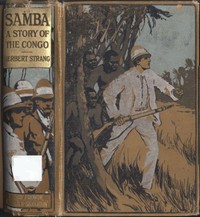
- Social Observation and Reform: Samba: A Story of the Rubber Slaves of the Congo (Herbert Strang) exposes colonial exploitation, while The Orphans of Glen Elder (Margaret M. Robertson) and Little Friend Lydia (Ethel Calvert Phillips) depict poverty and adoption. This path traces how children's literature addressed social issues through adventure and sentiment.
- Domestic and Moral Dilemmas: The Inglises; Or, How the Way Opened (Margaret M. Robertson), Ben Pepper (Margaret Sidney), and Jill's Red Bag (Amy Le Feuvre) focus on family responsibility, religious faith, and personal integrity. These works use everyday settings—homes, schools, villages—to explore ethical choices.
Each path can be followed by using the internal links on the book pages, which also offer editorial notes that highlight connections between texts.
Using the Archive
The catalogue is meant to be explored nonlinearly. Readers may start with any title and use the category tag to find similar works, or follow the cross-references in the editorial notes. The archive does not claim to represent every aspect of a book; rather, it offers a focused lens on authorial craft and thematic patterns.
Bibliographic dates and catalogue measurements
The catalogue distinguishes the Project Gutenberg digital release from a work’s original or first publication. Project Gutenberg is identified as the digital source for the edition available here; its release year is therefore shown as Gutenberg Release Year, not as the work’s original publication year.
When an explicit first-publication or issue date can be supported directly by the title or issue information, it may be shown separately as First Publication Year. When that date cannot be confirmed, the catalogue displays Not confirmed rather than guessing a year.
Where the source text can be measured reliably, the catalogue may provide word count and estimated reading time. These measurements describe reading scope and are not quality rankings.
The current catalogue contains 4 active subject categories: Young Readers, School Stories, Childrens Adventures, and Fairy Moral Tales. Categories are browsing aids and may overlap where a work reasonably fits more than one subject.