About 239 minutes
The Camp Fire Girls on the Open Road; Or, Glorify Work — Edition Insights
School Stories
54,857 recorded words. 3 minutes difference from this book's estimate.
View Gutenberg source #36485
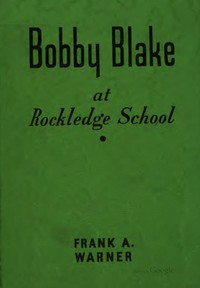
Bobby Blake at Rockledge School; or, Winning the Medal of Honor — A Reader’s Guide can be approached with a clearer sense of reading commitment from its source measurements: 54,153 words, 3 hr 56 min estimated reading time, and 9 detected text sections.
The text analysis averages about 12.8 words per sentence, while the detected sections provide another way to judge how the source is divided.
Project Gutenberg metadata also associates the work with “Schools -- Juvenile fiction,” connecting these edition facts with the source record’s subject description.
Explore this collection
These alternatives are selected using recorded categories and estimated reading time.
About 239 minutes
School Stories
54,857 recorded words. 3 minutes difference from this book's estimate.
View Gutenberg source #36485About 240 minutes
School Stories
55,188 recorded words. 4 minutes difference from this book's estimate.
View Gutenberg source #37803About 224 minutes
School Stories
51,355 recorded words. 12 minutes difference from this book's estimate.
View Gutenberg source #25798Search stored excerpts and compare books → Choose by your preferences →
Choices use stored catalog measurements. Estimates vary with reading speed. A shared category is a catalog label, not a claim that two books have the same argument or literary quality.
Search reads excerpt text stored with this catalog and links to its associated Gutenberg record. The connection is stored in the site database; this tool does not recheck that every excerpt is word-for-word identical to that external record. Excerpt search does not cover every chapter and does not verify historical publication dates.
Catalog snapshot checked: 2026-09-26. Coverage: 93 public books, 93 available source excerpts.
Calculated from edition completeness, EPUB availability, text structure and catalogue metadata. Not a user rating.
Total of 100 points, scaled to a 2.5-5.0 range. Editions with an empty description or a missing EPUB file are not scored.
Public-domain source text
The source text is kept in the dedicated reader, separate from this catalogue record and its commentary.
The story begins not at school but on the porch of Bobby Blake's home, where a red-haired boy hesitates to enter. Bobby's presence is announced by a muffled "Whoo! whoo!" and a thumping descent from the roof—a playful imitation of a steam train. The narrative voice is brisk and observant, noting details like Meena's "very red elbows" and the mahogany balustrade that tempts small boys to slide. This opening establishes Bobby as energetic and imaginative, traits that will be tested at Rockledge School.
When Bobby and his friend Fred Martin arrive at Rockledge, they encounter a structured world of dormitories, cheers, and a mysterious blue-and-white button. The principal, Doctor Raymond, introduces the Medal of Honor—a five-pointed gold star—and explains that it rewards not just academics but restraint under provocation and general popularity. The excerpts suggest the story will follow Bobby's navigation of this honor system, though the complete outcome is not revealed here.
The opening chapter, "The Overland Limited," introduces Bobby through sound and motion. He mimics a train whistle from the roof, then lands with a "bang" on the rug. This playful energy is balanced by his friend's cautious approach and Meena's sharp-tongued supervision. The narrative pays close attention to physical details: the "freckled face and fiery red hair" of the visitor, the "tight 'pug'" of Meena's hair, and the "ground-glass oval windows" lighting the stairwell. These details ground the story in a specific domestic setting before the action moves to school.
Bobby's curiosity is evident when he later notices the blue-and-white enameled buttons worn by some boys. He guesses there is "some society, or inner circle" at Rockledge. This observation, made during the welcoming assembly, shows his alertness to social structures—a quality that will likely serve him in the medal competition.
Doctor Raymond's speech about the Medal of Honor is the centerpiece of the excerpts. He describes it as a "five-pointed gold star" with a "beautiful blue-velvet background" and outlines the criteria: studiousness, good conduct, manliness, and general popularity. Notably, he emphasizes that the faculty votes on deportment and class standing, but the boys themselves "must—after all—choose the winner." This dual system creates a tension between official approval and peer recognition.
The principal also warns that the medal is not always won by the one who sets out to win it. He praises the boy who "restrains himself under provocation" and "keeps straight on his way without turning aside because of any temptation." These words, spoken to the whole school, set up a moral framework that Bobby and his friend Fred must navigate. The excerpts do not show how Bobby responds to this challenge, but the groundwork is laid for a story about character as much as achievement.
When Captain Gray calls for a Rockledge cheer, the boys shout in unison: "One, two, three—boom! Boom—Z-z-z—ah! Rockledge! Rockledge! Sword and star! Who's on top? We sure are—Rock-ledge!" This chant, with its rhythmic syllables and proud boast, reinforces school spirit. The motto "Sword and star" echoes the doctor's later speech about the "Sword of Determination" hewing a way to the goal. The cheer is a ritual that bonds the students and marks newcomers like Bobby and Fred as outsiders.
The blue-and-white button with a star and sword is a visible symbol of belonging. Bobby notices that not all boys wear it—Pee Wee and others from his dormitory do not. This detail hints at social divisions within the school. The button may represent an honor society or a group of older students, but the excerpts do not clarify its exact meaning. Readers are left to infer that Bobby's journey will involve earning or understanding this emblem.
The prose is direct and action-oriented, with short sentences and vivid dialogue. The narrator often reports characters' thoughts, as when Bobby "guessed that there was some society" behind the buttons. This technique keeps the reader close to Bobby's perspective. The story moves quickly from home to school, with the train journey and arrival at Rockledge implied rather than shown. The excerpts skip over the travel and focus on key scenes: the home porch, the assembly, and the dormitory.
The table of contents lists chapters with intriguing titles like "The Poguey Fight," "The Bloody Corner," and "Red Hair Stands for More Than Temper." These suggest conflicts and character development ahead. The final chapter, "The Winner," implies a resolution to the medal contest. However, the excerpts do not reveal who wins or how Bobby's red-haired friend (possibly Fred Martin) factors into the story. The incomplete text leaves readers with a clear setup but an open outcome.
These excerpts establish Bobby Blake as an observant, energetic boy entering a school where honor is both a prize and a code. The Medal of Honor is presented as a goal that requires not just good grades but moral character and peer respect. Readers should pay attention to the blue-and-white button and the school cheer as recurring symbols. The incomplete story leaves the medal's winner unknown, but the groundwork is laid for a tale of competition, friendship, and self-discipline.
Years among these stacks have shown me how a boy’s striving for a simple blue button, as in Bobby Blake, mirrors the quiet footsteps of those two little travellers. Both books breathe the same patient air—of small tests, small triumphs, and the unspoken code between companions. A shelf holds them closer than you might think. Two little travellers — Edition Insights whispers that same gentle truth.
Create a short personal record of your experience with this book.