About 271 minutes
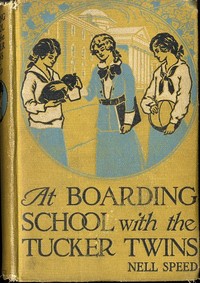
At Boarding School with the Tucker Twins — Inside the Classic
School Stories
62,316 recorded words. 9 minutes difference from this book's estimate.
View Gutenberg source #36018
Before opening Two little travellers — Edition Insights, the edition data offers a quick orientation: 60,216 words, 4 hr 22 min estimated reading time, and 7 detected text sections.
The text analysis averages about 20.5 words per sentence, while the detected sections provide another way to judge how the source is divided.
Project Gutenberg metadata also associates the work with “Christian life -- Juvenile fiction,” connecting these edition facts with the source record’s subject description.
Explore this collection
These alternatives are selected using recorded categories and estimated reading time.
About 271 minutes
School Stories
62,316 recorded words. 9 minutes difference from this book's estimate.
View Gutenberg source #36018About 240 minutes
School Stories
55,188 recorded words. 22 minutes difference from this book's estimate.
View Gutenberg source #37803About 239 minutes
School Stories
54,857 recorded words. 23 minutes difference from this book's estimate.
View Gutenberg source #36485Search stored excerpts and compare books → Choose by your preferences →
Choices use stored catalog measurements. Estimates vary with reading speed. A shared category is a catalog label, not a claim that two books have the same argument or literary quality.
Search reads excerpt text stored with this catalog and links to its associated Gutenberg record. The connection is stored in the site database; this tool does not recheck that every excerpt is word-for-word identical to that external record. Excerpt search does not cover every chapter and does not verify historical publication dates.
Catalog snapshot checked: 2026-09-26. Coverage: 93 public books, 93 available source excerpts.
Calculated from edition completeness, EPUB availability, text structure and catalogue metadata. Not a user rating.
Total of 100 points, scaled to a 2.5-5.0 range. Editions with an empty description or a missing EPUB file are not scored.
Public-domain source text
The source text is kept in the dedicated reader, separate from this catalogue record and its commentary.
The opening chapter of Two Little Travellers immediately establishes a richly sensory autumn setting under a cedar tree, where the narrator lingers on the 'red-cheeked apples' and 'dark-skinned winter pears' ripening in the orchard. The prose is unhurried, weaving together natural observation with a childlike wonder that mirrors the protagonists' perspective. The author, writing under the pseudonym Ray Cunningham, employs a formal yet warm narrative voice, occasionally addressing the reader directly. The chapter's epigraph from Mary Howitt's poem sets a pastoral tone, while the children's dialogue—Darby's earnest questions and Joan's soft replies—reveals their innocence and trust. These early choices in diction and description establish the story's moral framework: a world where nature's bounty and adult promises are equally reliable, a premise soon tested by the children's journey.
The author builds the world of Firgrove through precise, tangible details. The cedar tree is 'huge,' the rooks 'cawed so loudly,' and the lime tree drops 'a pale dry leaf, falling softly.' These observations ground the story in a specific time and place—autumn in an English countryside—while also hinting at change and decay. The description of the harvest: 'stooks of rich, ripe, yellow grain' and 'high domed castles' of corn, uses concrete imagery to evoke abundance and security. This sensory richness contrasts sharply with later scenes, such as the 'dreary common' and the caravan's 'dry bread' and 'bitter coffee,' where the absence of comfort underscores the children's vulnerability. The author's attention to seasonal detail is not merely decorative; it establishes a baseline of order and beauty against which the ensuing chaos is measured.
Darby and Joan's speech patterns reveal their age and moral development. Darby's dialogue is marked by earnest logic and a literal trust in adult words: 'You promised— she promised,' he says to Thieving Joe, his 'lips quivering piteously.' Joan's responses are softer, often reduced to 'whimper softly' or simple questions. The author contrasts their innocence with the coarse, manipulative speech of the adults. Moll's 'broadly-smiling face and unscrupulous eyes' and Joe's rough command, 'Look ee here now, young Hop-o'-my-thumb,' employ dialect and colloquialisms to mark them as untrustworthy. Darby's internal realization—'his first lesson in the meaning of deceit'—is shown through his physical reaction: 'all the healthy colour had fled from his cheeks.' The dialogue thus serves as a vehicle for moral education, with the children's pure language set against the adults' deceptive rhetoric.
The author uses literary and biblical allusions to frame the children's journey as a moral pilgrimage. Chapter X, 'The Happy Land,' opens with Wordsworth's 'Heaven lies about us in our infancy' and a couplet from Rowe on happiness and goodness. These epigraphs signal the story's didactic intent: the children's quest for a literal 'Happy Land' mirrors a spiritual search for innocence and virtue. Earlier, the chapter 'Hill Difficulty' echoes Bunyan's Pilgrim's Progress, mapping a Christian allegory onto a secular adventure. The narrator's voice occasionally steps back to comment on events, as when Darby 'had his first lesson in the meaning of deceit.' This technique guides the reader's interpretation without breaking the narrative flow. The allusions are woven into the fabric of the story, not merely appended, reinforcing the theme that childhood is a state of grace threatened by worldly corruption.
The author employs a third-person omniscient narrator who occasionally addresses the reader directly, a technique common in Victorian children's literature. In the opening chapter, the narrator speculates about the 'diary people' making a mistake, inviting the reader to share in the children's perspective. This direct address creates intimacy and guides emotional response. The story's structure alternates between pastoral calm and sudden peril: the children are 'left behind,' then taken by the caravan, then threatened by Thieving Joe. The narrator's tone remains steady, even when describing frightening events, which reassures the reader that order will be restored. The use of chapter titles like 'The Babes in the Wood' and 'A Terrible Fright' signals genre conventions of adventure and moral trial. This narrative architecture, combined with the author's descriptive restraint, keeps the focus on the children's inner experience rather than sensational plot twists.
Readers attentive to the author's craft will notice how Frances Browne Arthur balances sensory description with moral instruction. The children's journey is as much internal as external; their encounters with deceit and danger serve as lessons in discernment. The story rewards close reading of its dialogue and descriptive passages, where the author's choices in diction—from the 'sleek dun mice' of the harvest to the 'coarse, red-haired man' of the caravan—build a world that is both vivid and instructive. This edition preserves the original text's period flavor, inviting modern readers to explore a late-Victorian moral adventure through the lens of its language and structure.
That rainy afternoon, I kept returning to how Frances Browne Arthur let autumn carry the children’s moods—diction like fallen leaves, unhurried and precise. Later, idly, I found myself in the same quiet lane with The Girls of Central High on the Stage; Or, The Play That Took The Prize — Edition Insights, and it felt like the same gentle hand guiding different voices toward their own small truths.
A brief reflection can help important ideas stay with you longer.