About 201 minutes
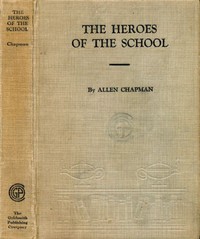
The Heroes of the School; or, The Darewell Chums Through Thick and Thin — Reading Notes
School Stories
46,157 recorded words. 10 minutes difference from this book's estimate.
View Gutenberg source #37291

For The Girls of Central High on the Stage; Or, The Play That Took The Prize — Edition Insights, the stored edition analysis reports 43,832 words, 3 hr 11 min estimated reading time, and 5 detected text sections.
The text analysis averages about 13.3 words per sentence, while the detected sections provide another way to judge how the source is divided.
Project Gutenberg metadata also associates the work with “Schools -- Juvenile fiction,” connecting these edition facts with the source record’s subject description.
Explore this collection
These alternatives are selected using recorded categories and estimated reading time.
About 201 minutes
School Stories
46,157 recorded words. 10 minutes difference from this book's estimate.
View Gutenberg source #37291About 216 minutes
School Stories
49,669 recorded words. 25 minutes difference from this book's estimate.
View Gutenberg source #26015About 224 minutes
School Stories
51,355 recorded words. 33 minutes difference from this book's estimate.
View Gutenberg source #25798Search stored excerpts and compare books → Choose by your preferences →
Choices use stored catalog measurements. Estimates vary with reading speed. A shared category is a catalog label, not a claim that two books have the same argument or literary quality.
Search reads excerpt text stored with this catalog and links to its associated Gutenberg record. The connection is stored in the site database; this tool does not recheck that every excerpt is word-for-word identical to that external record. Excerpt search does not cover every chapter and does not verify historical publication dates.
Catalog snapshot checked: 2026-09-26. Coverage: 93 public books, 93 available source excerpts.
Calculated from edition completeness, EPUB availability, text structure and catalogue metadata. Not a user rating.
Total of 100 points, scaled to a 2.5-5.0 range. Editions with an empty description or a missing EPUB file are not scored.
Public-domain source text
The source text is kept in the dedicated reader, separate from this catalogue record and its commentary.
The Girls of Central High on the Stage opens with the M.O.R. house “alight from cellar to garret” for its first big reception of the winter, a scene that immediately establishes the secret society as a central institution. The initials M.O.R. are never explained—the narrator declares “we shall never learn just what ‘M. O. R.’ stands for”—creating a deliberate mystery that sets the society apart from the school’s official activities. The boys’ jealous nickname “Mothers of the Republic” hints at the girls’ exclusive control over this space, which long predates the Girls’ Branch Athletic League. The house itself, a “narrow slice of brownstone front” in the exclusive Hill section, becomes a symbol of both privilege and financial strain, as its rental burden weighs on the Board of Governors.
The M.O.R. house is described with precise dimensions: a “thirteen-foot slice of brownstone” in a block of similar dwellings, within sight of the school. This narrowness contrasts with the social weight the society carries. The rental cost has become “a serious problem” for the Board of Governors, hinting that even among the Hill’s exclusive residents, money is a concern. The society’s membership has thinned—some have gone to college, married, or moved away—yet those who remain “remembered tenderly” the society. This tension between maintaining a prestigious physical space and the practical difficulty of funding it recurs throughout the excerpts.
Jess Morse’s family faces a more acute version of the same problem. They rent from Mr. Chumley, who has raised their rent and threatens eviction. Mrs. Prentice, a wealthy woman, offers Jess a cottage she owns, but the transaction is not entirely altruistic: she “neglected to say that she had paid the tenant a certain sum to leave.” Jess’s mother hesitates, “shrank from the change,” and questions the expense of moving. Jess must “attend to every detail” herself, hiring a truckman and packing after school. The contrast between the M.O.R.’s collective rental struggle and Jess’s individual hustle underscores how economic pressure operates differently across the social spectrum.
Jess Morse is introduced as a “practical girl” by Mrs. Prentice, who observes that Jess will have to “do something yourself toward moving, to get your mother started.” Jess’s practicality is evident in her quick assessment of the cottage: “It is a way opened, Mrs. Prentice! Better than we could ever expect.” Yet her mother doubts, saying “I am afraid you were not politic enough” with Mr. Chumley. Jess counters that the landlord “has already raised it and threatened to put us out.” The dialogue reveals a generational divide: Mrs. Morse hopes the old gentleman will relent, while Jess sees the situation as final.
Jess’s resourcefulness extends to financial calculation. She argues that the two dollars less per month in rent “will soon pay for that” moving expense. She obtains a portion of her mother’s check for current expenses and manages the move herself. The narrator notes that “Jess had to do it all.” This self-reliance is a recurring trait, but it is also a necessity born of limited options. The excerpts do not show Jess on stage or rehearsing for the play; instead, they depict her navigating housing insecurity. The play, promised by the title, remains a future event, and Jess’s immediate challenges are material rather than artistic.
Despite the title’s promise of a play that “took the prize,” the excerpts focus on the M.O.R. society’s reception and Jess’s housing crisis. The play itself is not described in the provided text. The society’s initials remain a secret, and the boys’ nickname “Mothers of the Republic” is dismissed as jealousy. The society’s house is a space from which boys are “entirely shut out,” save for an Easter reception. This gendered exclusivity mirrors the broader structure of the story: the girls’ world is self-contained, with its own hierarchies and problems.
The excerpts hint at a larger narrative arc—Jess’s involvement in the play likely connects to her financial needs or social standing—but the evidence does not reveal how. The chapter titles, such as “The First Dress Rehearsal” and “The Great Night,” suggest the play is a major event, but the provided text stops before those scenes. Readers must infer that Jess’s practical skills and determination will serve her in the theatrical endeavor, just as they do in securing housing. The mystery of the M.O.R. initials and the unseen play create a sense of anticipation that the full book presumably resolves.
Readers approaching this book should attend to the economic undercurrents that run beneath the surface of school life. The M.O.R. society’s financial strain and Jess’s housing troubles are not mere subplots; they shape the characters’ decisions and relationships. The play, when it finally appears, may serve as a stage for these tensions to play out. Pay attention to how the narrator withholds information—the society’s name, the play’s content—and consider what these gaps reveal about the story’s priorities.
I remember how The Girls of Central High on the Stage whispered of hidden societies and the quiet ache of wanting more than one's pockets allow. It made me think of Two little travellers — Edition Insights, another pair of young souls finding their way through small necessities and larger wonders. Both sit together on my shelf, sharing that gentle, unspoken understanding.
Capture what you thought, learned, and would like to remember.