About 240 minutes
Rocky Mountain Boys; Or, Camping in the Big Game Country — Text and Context
School Stories
55,188 recorded words. 1 minutes difference from this book's estimate.
View Gutenberg source #37803
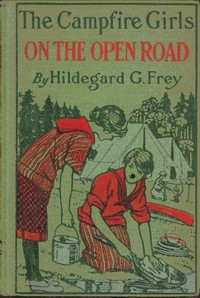
The Camp Fire Girls on the Open Road; Or, Glorify Work — Edition Insights can be approached with a clearer sense of reading commitment from its source measurements: 54,857 words, 3 hr 59 min estimated reading time, and 7 detected text sections.
The text analysis averages about 17.2 words per sentence, while the detected sections provide another way to judge how the source is divided.
Project Gutenberg metadata also associates the work with “Camp Fire Girls -- Juvenile fiction,” connecting these edition facts with the source record’s subject description.
Explore this collection
These alternatives are selected using recorded categories and estimated reading time.
About 240 minutes
School Stories
55,188 recorded words. 1 minutes difference from this book's estimate.
View Gutenberg source #37803About 236 minutes
School Stories
54,153 recorded words. 3 minutes difference from this book's estimate.
View Gutenberg source #39799About 224 minutes
School Stories
51,355 recorded words. 15 minutes difference from this book's estimate.
View Gutenberg source #25798Search stored excerpts and compare books → Choose by your preferences →
Choices use stored catalog measurements. Estimates vary with reading speed. A shared category is a catalog label, not a claim that two books have the same argument or literary quality.
Search reads excerpt text stored with this catalog and links to its associated Gutenberg record. The connection is stored in the site database; this tool does not recheck that every excerpt is word-for-word identical to that external record. Excerpt search does not cover every chapter and does not verify historical publication dates.
Catalog snapshot checked: 2026-09-26. Coverage: 93 public books, 93 available source excerpts.
Calculated from edition completeness, EPUB availability, text structure and catalogue metadata. Not a user rating.
Total of 100 points, scaled to a 2.5-5.0 range. Editions with an empty description or a missing EPUB file are not scored.
Public-domain source text
The source text is kept in the dedicated reader, separate from this catalogue record and its commentary.
The book opens not with the Winnebago troop together, but with a letter from Katherine, who is teaching in a remote school. Her voice is vivid and self-deprecating: she describes her heart sinking 'through the bottom of my number seven boots' when no letter arrives, and her daily skirmish with the bully Absalom Butts. The letter establishes a contrast between the dreary, rain-soaked setting and the spirited, humorous tone of the narrator.
This epistolary beginning immediately signals that the story will balance physical adventure with the inner lives of its characters. Katherine's frustration with teaching—'a roomful of children of assorted ages who seem as determined not to learn as I am determined to teach them'—grounds the narrative in a specific, relatable struggle, while the mention of Sandhelo, her dog, hints at the outdoor life that the title promises.
Katherine's letter is the most substantial excerpt, and it reveals a narrator who is both weary and witty. She describes the weather as 'a steady, warmish, sickening drizzle, that had taken all the curl out of my spirits,' a metaphor that ties her emotional state to the environment. The classroom details are specific: the 'preliminary skirmish' with Absalom Butts, the spelling struggles of Clarissa, and the 'limp as a rag' exhaustion after school. These observations suggest a theme of perseverance against mundane obstacles, rather than dramatic perils.
The letter also introduces Sandhelo, a dog who 'sat up on his haunches to get a better look at the apparition' when startled by a man. This small moment of animal behavior is rendered with precision, hinting at the observational style that may characterize the broader narrative. Katherine's isolation—six miles from the post office—and her longing for news from her friends establish a tension between duty and connection.
A second major thread involves Professor Jeremiah Selden, nicknamed 'Very Seldom,' a former sociology professor who has lost his voice and family. His hobby is Indian history, and he believes a legend of the White Buffalo proves that Penobscot Indians once visited the Great Plains. The excerpt shows him 'positively radiant' about his monograph, hoping for fame at last.
However, the narrative undercuts his triumph: the legend was brought to a college by a student named Harriet, who 'honestly believed' it was from Joseph Latoka's collection. The reader knows the legend's provenance is uncertain. This creates a tension between Selden's desperate need for validation and the shaky foundation of his discovery. The subplot introduces questions about intellectual property and the ethics of scholarly claims, set against the backdrop of a world war that is mentioned in the catalog subjects but not yet evident in these excerpts.
The excerpts also depict the social rituals of Brownell College. Miss Allison, the sociology professor who 'has him beat forty miles for teaching,' entertains Selden by 'jollying him along' and asking questions she already knows the answers to. This patronizing kindness is described without judgment, but it reveals a power dynamic: Selden is treated as a relic to be managed.
Migwan, a Camp Fire Girl, is invited to tea because she 'always gets her hair parted so straight in the middle, and never upsets her teacup.' This detail, offered as a faculty rationale, is gently ironic. It suggests that conformity and decorum are valued in the academic setting, contrasting with the more rugged, independent life implied by the series title. The scene positions Migwan as an observer of adult pretensions, a role that may recur throughout the book.
Readers should attend to how the two narrative strands—Katherine's rural teaching and the college legend controversy—connect. The excerpts offer no resolution to either plot, but they share a concern with work, recognition, and the gap between effort and reward. The title's imperative, 'Glorify Work,' may be tested against the characters' actual experiences. Look for how the Camp Fire Girls' ideals of service and community intersect with the more ambiguous motives of the adults around them.
In the old Camp Fire volume, there's a letter about a teacher finding her place among noisy children and long silences. I think of that quiet determination whenever I reach for The Tale of Rusty Wren — Reading Companion. Both feel like small, patient lessons in making do with one's own company, a gentle kinship I have treasured for years.
Create a short personal record of your experience with this book.