About 191 minutes
The Girls of Central High on the Stage; Or, The Play That Took The Prize — Edition Insights
School Stories
43,832 recorded words. 10 minutes difference from this book's estimate.
View Gutenberg source #37303
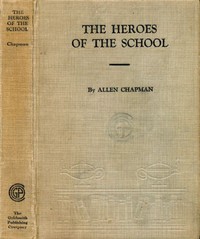
This digital edition of The Heroes of the School; or, The Darewell Chums Through Thick and Thin — Reading Notes is described by source-level measurements including 46,157 words, 3 hr 21 min estimated reading time, and 6 detected text sections.
The text analysis averages about 12.1 words per sentence, while the detected sections provide another way to judge how the source is divided.
Project Gutenberg metadata also associates the work with “Schools -- Juvenile fiction,” connecting these edition facts with the source record’s subject description.
Explore this collection
These alternatives are selected using recorded categories and estimated reading time.
About 191 minutes
School Stories
43,832 recorded words. 10 minutes difference from this book's estimate.
View Gutenberg source #37303About 216 minutes
School Stories
49,669 recorded words. 15 minutes difference from this book's estimate.
View Gutenberg source #26015About 224 minutes
School Stories
51,355 recorded words. 23 minutes difference from this book's estimate.
View Gutenberg source #25798Search stored excerpts and compare books → Choose by your preferences →
Choices use stored catalog measurements. Estimates vary with reading speed. A shared category is a catalog label, not a claim that two books have the same argument or literary quality.
Search reads excerpt text stored with this catalog and links to its associated Gutenberg record. The connection is stored in the site database; this tool does not recheck that every excerpt is word-for-word identical to that external record. Excerpt search does not cover every chapter and does not verify historical publication dates.
Catalog snapshot checked: 2026-09-26. Coverage: 93 public books, 93 available source excerpts.
Calculated from edition completeness, EPUB availability, text structure and catalogue metadata. Not a user rating.
Total of 100 points, scaled to a 2.5-5.0 range. Editions with an empty description or a missing EPUB file are not scored.
Public-domain source text
The source text is kept in the dedicated reader, separate from this catalogue record and its commentary.
The Darewell High School auditorium is the first stage for tension in Allen Chapman's 1908 boys' adventure. Professor McCloud's grim announcement that he has "a very unpleasant duty to perform" signals an expulsion, but the real unease belongs to Fenn Masterson, nicknamed Stumpy, who looks "worried" before the name John Newton is called. The scene establishes a pattern: official school authority clashes with the chums' private concerns. Ned Wilding, Bart Keene, Frank, and Fenn form a tight group whose conversations shift seamlessly from classroom gossip to plans for river trips and ball games. The excerpts show a world where a tramp claiming to be a naturalist—with clean hands and tattered clothes—can be invited to share a meal without hesitation, and where a box of salt becomes a token of exchange and mystery.
The opening chapter hinges on a public expulsion, yet the narrative focuses less on the expelled pupil than on the reactions of the chums. Fenn's worry is never fully explained in the excerpts; the reader only knows that John Newton's fate "might have something to do with me." This gap between official proceedings and the boys' private knowledge creates a quiet tension. The school's authority is absolute—Professor McCloud calls a name and a student "shambles forward"—but the chums operate by their own loyalties. Later, when a cow is brought into school (chapter X), the pattern repeats: institutional order is disrupted by the boys' antics, yet the story treats these disruptions as adventures rather than rebellions. The excerpts suggest that the real education happens outside the classroom, on riverbanks and in woods where the chums make their own rules.
The tramp who appears in chapters III and XVII is a study in contradictions. He wears "ragged clothes" and a "heavy growth of beard," yet his hands and face are clean, and his clothes, though tattered, are "not dirty." He claims to be a naturalist searching for a butterfly called the "Oiliander Tinicander," a name that sounds invented. When Fenn visits the tramp's camp, he sees "a lot of instruments" made of "brass or nickle plated" and boxes being dried out—details that suggest a cover story. The tramp is polite, joins the boys' meal without introducing himself, and asks for a ride across the river. His presence introduces an element of uncertainty: is he a harmless eccentric, a con artist, or something else? The excerpts leave this unresolved, inviting readers to watch for clues in his equipment and behavior.
A simple box of salt becomes a recurring motif. The tramp explains that his food spoiled in a boating accident, leaving him with "nothing but salt to eat." When Fenn asks to borrow salt, the tramp proposes an exchange: "persons with plenty to eat and no salt" versus "plenty of salt but nothing to eat." The chums accept, and the salt adds "zest" to their fried fish. Later, Bart thinks of asking the tramp to sell them salt, but Frank notes they can buy more in the next town. This small transaction highlights the chums' resourcefulness and the tramp's odd self-sufficiency. More intriguingly, the tramp's camp contains instruments that look nothing like camping gear, and he claims to be waiting for friends. The salt exchange may be a genuine coincidence or a deliberate contact—the excerpts do not say, but the detail lingers as a thread worth following.
Readers should pay close attention to what the chums notice but do not comment on: the tramp's clean hands, the brass instruments, the unexplained worry on Fenn's face. Chapman builds his story through such small, telling details rather than grand revelations. The river journey promises new encounters, and the chapter titles—"Up in a Balloon," "Striking Oil"—hint at escalating adventures. Approach this book as a puzzle where the clues are embedded in everyday objects and offhand remarks.
I keep thinking about those Darewell Chums and the quiet, unspoken things they carried—the salt, the hidden brass, the moments no one explained. It reminded me of the gentle weight in that little book, A Christmas Posy — Edition Insights, where even the smallest details seem to hold a warmth that stays with you long after. Strange how old stories do that.
Use these questions to collect your thoughts before moving on.