
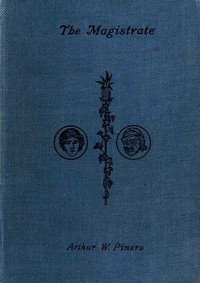
The Magistrate: A Farce in Three Acts by Arthur Wing Pinero
Picture this: London, 1885. Mr. Posket is a police court magistrate, a man who dishes out fines and moral lectures with equal vigor. He’s recently married the lovely Mrs. Posket, a widow with a son named Cis. There’s just one problem—Mrs. Posket has told a tiny fib. She claimed to be younger than she is, which means her son Cis is officially listed as being underage. Everyone’s happy with this arrangement until Cis, eager for a night out, gets caught at a less-than-respectable restaurant. The police haul him in, and the case lands right on his stepfather’s bench.
The Story
Mr. Posket, sitting in judgment, has no idea the young scamp in front of him is his own stepson. When he does find out, he’s trapped. If he treats Cis as an adult (which he really is), he exposes his wife’s lie and creates a public scandal. If he goes easy on him, he’s corrupting justice. His attempts to quietly fix the situation spiral into pure chaos. He ends up fleeing the police, hiding in a hotel, and getting arrested himself. It’s a classic snowball effect—one small secret triggers a landslide of ridiculous misfortune.
Why You Should Read It
What makes this play so fun is how familiar it feels. We’ve all told little lies to make ourselves look better, right? Pinero takes that universal itch and shows it unraveling spectacularly. Posket isn’t a villain; he’s a decent man who made a bad choice for love, and now he’s paying for it with his dignity. The comedy isn’t just about slamming doors and mistaken identities (though there’s plenty of that). It’s about the gap between the perfect image we project and the messy reality we live. You’ll cringe and laugh as Posket digs himself deeper, all while trying to keep his spotless reputation intact.
Final Verdict
This is perfect for anyone who loves a smart, fast-paced comedy. If you enjoy Oscar Wilde’s witty dialogue or the awkward social disasters in a Jane Austen novel, you’ll find a lot to love here. It’s also a great pick for theater fans curious about what came before the modern sitcom. The language is clear, the situations are absurd, and the take on hypocrisy is as relevant now as it was in the 1880s. Just be warned: you might look at your own little white lies a bit differently afterward.
This book is widely considered to be in the public domain. Feel free to use it for personal or commercial purposes.
Barbara Walker
3 months agoGood quality content.
Oliver Moore
2 years agoFrom the very first page, it challenges the reader's perspective in an intellectual way. I would gladly recommend this title.
James Harris
1 year agoGreat read!





Margaret Anderson
1 year agoTo be perfectly clear, the author's voice is distinct and makes complex topics easy to digest. I will read more from this author.