
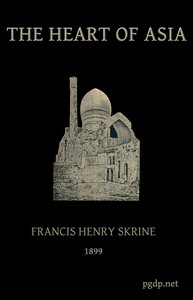
The heart of Asia : A history of Russian Turkestan and the Central Asian…
Sir E. Denison Ross’s 'The Heart of Asia' is a first-hand account of a world in the middle of a violent transformation. Written over a century ago, it reads like dispatches from the edge of an empire.
The Story
The book isn't a novel with a single plot, but the central drama is clear: the Russian conquest and administration of Turkestan. Ross lays out how the Russian Empire moved south, absorbing ancient cities like Tashkent, Samarkand, and Bukhara. He explains the political chess game between Russia and Britain (the famous 'Great Game'), where Central Asia was the board. But he doesn't stop with the generals and diplomats. He shows us the impact on the ground—the local emirs and khans trying to hold onto power, the nomadic tribes whose way of life was being fenced in, and the everyday people caught in the middle.
Why You Should Read It
What makes this book special is Ross's perspective. He wasn't just a historian in a library; he was a scholar and traveler who spoke local languages and was fascinated by the cultures he encountered. You get his clear-eyed observations on everything from Russian military tactics to the stunning architecture of Samarkand's mosques. He doesn't romanticize the past or excuse the brutality of conquest, but he helps you understand the sheer scale of the change. Reading it today, you see the roots of modern Central Asia's borders and political tensions. It’s history told with boots on the ground.
Final Verdict
This is a book for the curious traveler, the history enthusiast who wants to go beyond Europe, and anyone trying to understand a crucial, often overlooked part of the world. It’s not a breezy beach read—it’s a detailed, primary-source journey. But if you have an interest in how empires are built, how cultures collide, and why regions like Xinjiang, Afghanistan, and the Central Asian republics are the way they are today, this is a foundational and fascinating place to start. Think of it as an intelligent, time-traveling guidebook to the crossroads of civilization.
The copyright for this book has expired, making it public property. It is now common property for all to enjoy.
Jennifer Wilson
8 months agoI wanted to compare this perspective with traditional views, the critical analysis of current industry standards is very timely. This has become my go-to guide for this specific topic.
George Moore
2 months agoThis was exactly the kind of deep dive I was searching for, the practical checklists included are a great touch for real-world use. I appreciate the effort that went into this curation.
Ashley Jones
5 months agoComparing this to other titles in the same genre, the historical context mentioned in the early chapters is quite enlightening. I appreciate the effort that went into this curation.
Susan Jackson
5 months agoIf you're tired of surface-level information, the footnotes provide extra depth for those who want to dig deeper. I am looking forward to the author's next publication.






Michael Martinez
7 months agoFrom a researcher's perspective, the attention to detail regarding the core terminology is flawless. I'll be citing this in my upcoming project.