
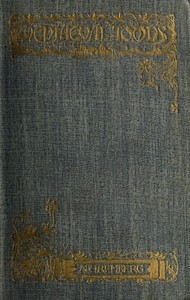
The Story of Nuremberg by Cecil Headlam
So, what's this book actually about? It’s a biography of a city, written over a century ago. Cecil Headlam acts as your guide, walking you through Nuremberg's rise from a minor settlement to a free imperial city at the heart of Europe. He shows you the towering stone walls, the bustling market squares, and introduces you to the larger-than-life characters who called it home, like the artist Albrecht Dürer. The book spends a lot of time in the city's golden age, the 15th and 16th centuries, when it was a hub of trade, art, and invention.
The Story
The 'story' here isn't a traditional plot with a hero and villain. It's the story of a place. Headlam builds the city up brick by brick, showing its political struggles, its artistic triumphs, and its slow decline after the Thirty Years' War. The original book ends long before the 20th century, but knowing what we know now—about the Nazi rallies at the Zeppelin Field and the Nuremberg Trials—casts a long, complicated shadow over everything you read about its earlier glory. It creates a powerful, unspoken tension. You're reading about the creation of a cultural jewel, all while knowing the terrible purpose it would later serve.
Why You Should Read It
I loved this because it’s history with personality. Headlam doesn't just list dates; he makes you feel the cobblestones underfoot and hear the clamor of the market. You get a real sense of what made this city tick. Reading it today is a unique experience. It’s like looking at a grand old photo album, but one where you can see the faint outline of a future tragedy in the background. It makes you think deeply about how cities carry their history, for better and for worse. The book itself is a historical artifact, showing how a writer in the early 1900s viewed the medieval past.
Final Verdict
This is perfect for anyone who loves deep-dive histories of specific places, or for travelers who want to understand a destination beyond the guidebook. It's especially compelling for readers interested in Germany, medieval history, or in how the past continuously shapes the present. Be warned: it’s an older book, so the style is a bit more formal than modern writing, but if you settle into its rhythm, it’s a rewarding and surprisingly poignant journey. You won't get a direct account of the World Wars, but you'll get the essential, centuries-long prologue that makes that later history so haunting.
You are viewing a work that belongs to the global public domain. It is now common property for all to enjoy.
Margaret Harris
1 year agoI've been looking for a reliable source on this topic, and the insights into future trends are particularly thought-provoking. An excellent example of how quality digital books should be formatted.
Susan Johnson
4 months agoThe balance between academic rigor and readability is perfect.
John Taylor
4 months agoComparing this to other titles in the same genre, the nuanced approach to the central theme was better than I expected. A perfect balance of theory and practical advice.
Mary Thomas
1 year agoThe research depth is palpable from the very first chapter.
Jennifer Martinez
11 months agoHaving explored several resources on this, I find that the transition between theoretical knowledge and practical application is seamless. This has become my go-to guide for this specific topic.