
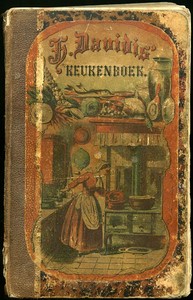
Keukenboek by Henriette Davidis
Let's be clear from the start: Keukenboek is not a book you read for fun weekend dinner ideas. Published in the mid-1800s, this is the German household bible that defined domestic life for generations. Henriette Davidis didn't just write recipes; she wrote the rulebook.
The Story
There isn't a plot in the traditional sense. Instead, the 'story' is the meticulous blueprint for a well-ordered 19th-century home. Davidis walks you through everything. I mean everything. You get detailed recipes (some quite complex!), but also schedules for the maid, instructions for laundry day, tips on preserving food for winter, and even advice on how to set a proper table for guests. The book assumes a middle-class household with some help, and its goal is total efficiency and propriety. It's a masterclass in management, written decades before that was a common concept for the home.
Why You Should Read It
This book hooked me because it's a direct line to the past. You feel the weight of expectation on the women who used it. It's practical, sometimes harsh, and incredibly detailed. Reading it, you realize how much intellectual and physical labor went into simply keeping a family fed and a house clean before modern appliances. Davidis herself is a shadowy figure—a unmarried woman who became the ultimate authority on domesticity. There's a quiet power in that. She carved out a space of immense influence by mastering the very sphere society told women was their only concern. The book is a mix of useful wisdom (her bread advice is solid) and charmingly outdated notions (the sections on managing 'servant girls' are a period piece). It makes you think deeply about how we value work, especially 'women's work,' both then and now.
Final Verdict
This is a perfect pick for history lovers, especially anyone interested in social history, women's studies, or the history of everyday life. Foodies with a historical bent will geek out over the recipes and techniques. It's also great for writers looking to add authentic domestic detail to a historical novel. It's not a cover-to-cover read for most, but dipping into it is a fascinating experience. Think of it less as a cookbook and more as an archaeological dig into the kitchen—one that reveals the bones of an entire social structure.
This work has been identified as being free of known copyright restrictions. Thank you for supporting open literature.
Dorothy Brown
1 year agoFinally a version with clear text and no errors.
Anthony Jones
1 year agoAfter hearing about this author multiple times, the author's voice is distinct and makes complex topics easy to digest. Exactly what I needed.
Amanda Jackson
1 year agoBased on the summary, I decided to read it and it creates a vivid world that you simply do not want to leave. Highly recommended.
William Scott
4 months agoJust what I was looking for.






Jackson Wilson
1 year agoAs someone who reads a lot, the pacing is just right, keeping you engaged. A true masterpiece.