About 150 minutes
Sunny Boy in the Country — Inside the Classic
Childrens Adventures
34,411 recorded words. 1 minutes difference from this book's estimate.
View Gutenberg source #26232
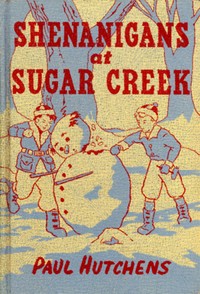
Shenanigans at Sugar Creek — Background and Themes can be approached with a clearer sense of reading commitment from its source measurements: 34,628 words, 2 hr 31 min estimated reading time, and 12 detected text sections.
The text analysis averages about 26.0 words per sentence, while the detected sections provide another way to judge how the source is divided.
Project Gutenberg metadata also associates the work with “Christian life -- Juvenile fiction,” connecting these edition facts with the source record’s subject description.
Explore this collection
These alternatives are selected using recorded categories and estimated reading time.
About 150 minutes
Childrens Adventures
34,411 recorded words. 1 minutes difference from this book's estimate.
View Gutenberg source #26232About 148 minutes
Childrens Adventures
33,850 recorded words. 3 minutes difference from this book's estimate.
View Gutenberg source #29598About 161 minutes
Childrens Adventures
36,858 recorded words. 10 minutes difference from this book's estimate.
View Gutenberg source #26348Search stored excerpts and compare books → Choose by your preferences →
Choices use stored catalog measurements. Estimates vary with reading speed. A shared category is a catalog label, not a claim that two books have the same argument or literary quality.
Search reads excerpt text stored with this catalog and links to its associated Gutenberg record. The connection is stored in the site database; this tool does not recheck that every excerpt is word-for-word identical to that external record. Excerpt search does not cover every chapter and does not verify historical publication dates.
Catalog snapshot checked: 2026-09-26. Coverage: 93 public books, 93 available source excerpts.
Calculated from edition completeness, EPUB availability, text structure and catalogue metadata. Not a user rating.
Total of 100 points, scaled to a 2.5-5.0 range. Editions with an empty description or a missing EPUB file are not scored.
Public-domain source text
The source text is kept in the dedicated reader, separate from this catalogue record and its commentary.
The narrator of Shenanigans at Sugar Creek speaks in a colloquial, breathless first-person that immediately establishes a boy’s-eye view of trouble. “One tough guy in the Sugar Creek territory was enough to keep us all on the lookout,” he begins, and the sentence’s loose, additive structure mirrors the gang’s constant vigilance. The voice is intimate, full of asides and shared knowledge—the reader is assumed to know about Big Bob Till and the gang’s history. This narrative closeness is the book’s engine: the reader is placed inside the gang’s collective mind, where a picture in The Hoosier Schoolmaster can spark a “very mischievous idea” that lingers for weeks.
The narrator’s mind does not stay still. During a sermon, he reports, “my thoughts flew away like they were birds with wings, and for quite a while I didn’t even know I was in church.” This is not a lapse in attention but a structural habit: the narrative repeatedly drifts into memory, simile, or speculation before snapping back to the present. The digressions are not random—they often circle around guilt or desire. When the minister quotes Isaiah, the narrator recalls Poetry’s lamb with dirty fleece from an earlier book, linking scripture to a private joke. The voice thus creates a layered interior world, where moral lessons are filtered through the gang’s own lore and language.
The entire plot seems to hinge on one glossy picture in The Hoosier Schoolmaster: a teacher on a roof, holding a board over a chimney. The narrator and Poetry study it in bed, and the image “stayed there until a week or two after Christmas, before it got us.” The book does not explain why this particular image takes hold—it simply lodges in the boys’ minds. The narrator’s description is precise: the teacher is “away up on the roof,” the boys tumble out “along with a lot of smoke.” The comparison to smoking out a skunk “along Sugar Creek” grounds the literary reference in local knowledge. The image becomes a plan, but the narrative never over-explains the transition; it trusts the reader to feel the pull of a mischievous idea.
The book alternates between quick, dialogue-driven scenes of plotting and slower, more reflective passages set in church. The church scene in section 8 is notably static: the narrator sits, listens, and thinks. The minister’s words are quoted at length—“The blood of Jesus Christ, the Son of God, will cleanse you from all sin, right that very minute”—and the narrator’s response is internal, not action. This pause resets the emotional tempo. Earlier, the pace is clipped with action verbs: “pulled up,” “got out,” “hurried up.” In church, the verbs become passive: “I was sitting,” “I noticed,” “my thoughts were flying.” These shifts in pace are not accidental; they create a rhythm of conscience, where mischief is followed by stillness, and stillness by renewed resolve.
Readers will notice how the narrator’s voice controls the story’s moral temperature. He never judges the gang’s pranks outright, but his digressions and silences reveal a conscience at work. Pay attention to the moments when the narrative slows down—these are where the book does its most interesting work, letting a single image or a line of scripture echo through the boys’ world. The result is a children’s adventure that is as much about the inner life of its narrator as about the shenanigans themselves.
Years among the stacks, and still I recall how Shenanigans at Sugar Creek lets a boy’s own voice stumble toward honesty—same quiet kinship I find in A Walk and a Drive. — Reading Notes, where reflection follows the road’s rhythm. Two companions, each finding their conscience by simply walking on.
Use these questions to collect your thoughts before moving on.