About 187 minutes
Penny Nichols and the Black Imp — Inside the Classic
Childrens Adventures
42,941 recorded words. 1 minutes difference from this book's estimate.
View Gutenberg source #33382
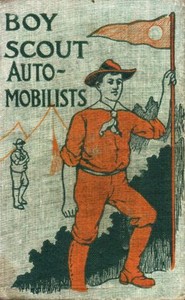
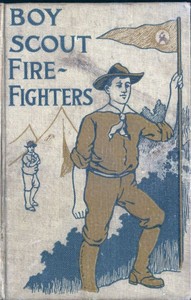
The catalog record for The Boy Scout Automobilists; Or, Jack Danby in the Woods — Reading Notes provides practical reading context through 42,661 words, 3 hr 6 min estimated reading time, and 4 detected text sections.
The text analysis averages about 16.3 words per sentence, while the detected sections provide another way to judge how the source is divided.
Project Gutenberg metadata also associates the work with “Boy Scouts -- Juvenile fiction,” connecting these edition facts with the source record’s subject description.
Explore this collection
These alternatives are selected using recorded categories and estimated reading time.
About 187 minutes
Childrens Adventures
42,941 recorded words. 1 minutes difference from this book's estimate.
View Gutenberg source #33382About 184 minutes
Childrens Adventures
42,285 recorded words. 2 minutes difference from this book's estimate.
View Gutenberg source #26875About 188 minutes
Childrens Adventures
43,049 recorded words. 2 minutes difference from this book's estimate.
View Gutenberg source #27983Search stored excerpts and compare books → Choose by your preferences →
Choices use stored catalog measurements. Estimates vary with reading speed. A shared category is a catalog label, not a claim that two books have the same argument or literary quality.
Search reads excerpt text stored with this catalog and links to its associated Gutenberg record. The connection is stored in the site database; this tool does not recheck that every excerpt is word-for-word identical to that external record. Excerpt search does not cover every chapter and does not verify historical publication dates.
Catalog snapshot checked: 2026-09-26. Coverage: 93 public books, 93 available source excerpts.
Calculated from edition completeness, EPUB availability, text structure and catalogue metadata. Not a user rating.
Total of 100 points, scaled to a 2.5-5.0 range. Editions with an empty description or a missing EPUB file are not scored.
Public-domain source text
The source text is kept in the dedicated reader, separate from this catalogue record and its commentary.
The first chapter of The Boy Scout Automobilists opens with a direct question from Pete Stubbs to Jack Danby about a special meeting, immediately establishing dialogue as the primary mode of exposition. The conversation reveals that Scout-Master Durland has arranged for the troop to participate in state militia maneuvers, blending Boy Scout activities with military training. This early focus on permission from employers and the legal obligations for militia service grounds the story in a specific historical context—World War I-era America—where civilian and military spheres intersect. The narrative voice is brisk and informational, with Jack explaining the situation to Pete in a manner that also informs the reader.
The opening excerpt relies heavily on dialogue between Jack and Pete to convey the premise. Jack's line, "I guess it isn't a secret any more," signals that the reader is being let in on a developing plan. The conversation covers practical obstacles—employers granting time off—which adds a layer of realism. The meeting at headquarters and Scout-Master Durland's announcement are described briefly, with the narrator summarizing the troop's "noisy welcome." This efficient setup prioritizes plot momentum over character depth, typical of series fiction. The reader is quickly oriented to the stakes: the troop has been invited to join militia maneuvers, a "great honor" that requires negotiation with civilian workplaces.
In the middle excerpts, the narrative shifts to the maneuvers themselves. Jack and Tom observe a simulated battle from a hilltop, with Jack explaining the role of umpires who "make a detailed report of all the operations to the War Department." This meta-commentary turns the war game into a learning exercise. The description of troops "seeking all possible cover" and the bugle call for "Cease Firing" emphasizes the structured, rule-bound nature of the exercise. Jack's critique—"They hung on too long"—shows his tactical thinking. The excerpts highlight how the story uses the militia setting to teach military strategy and the importance of observation, a key scouting skill.
Chapter X begins with the line, "Jack Danby's clever scouting had changed the entire situation," directly linking his skills to the Red army's success. The text notes that his scouting made General Bliss's position "decidedly precarious," reinforcing the idea that intelligence-gathering is as crucial as combat. The narrative frames scouting as a decisive factor in the war game, elevating the Boy Scouts' role from observers to key participants. This section also introduces the concept of "advantage of position" favoring the Red forces, a detail that underscores the strategic thinking embedded in the story. The reader sees how Jack's actions influence the larger military outcome.
The excerpts reveal a consistent narrative voice: third-person, past tense, with occasional direct address to the reader through dialogue. The structure follows a pattern of problem, action, and resolution, typical of series adventures. The language is straightforward, with terms like "hobbled" horses and "dismounted troopers" used without explanation, assuming some familiarity with military terminology. The story balances action with explanatory passages, as when Jack describes the umpires' role. This blend of instruction and adventure reflects the book's dual purpose: to entertain and to promote scouting values. The excerpts do not reveal the complete plot, but they establish a clear trajectory from civilian life to military engagement.
Readers approaching this book for the first time should pay attention to how the narrative uses the militia maneuvers as both a plot device and a teaching tool. The excerpts suggest that the story rewards attention to tactical details and the practical application of scouting skills. The brisk dialogue and efficient scene-setting are hallmarks of early twentieth-century series fiction, prioritizing action over introspection. This editorial note is based solely on the provided excerpts and metadata; the full book may develop characters or subplots not evident here.
There’s something about rereading those early excerpts—the quiet shift from patrol games to something heavier—that stayed with me. It reminded me of another old mystery, where attention to small details changes everything. That careful noticing, the way a stray bond or a footprint matters. The Missing Tin Box; Or, The Stolen Railroad Bonds — A Closer Reading feels like that same patient watching, somehow.
Create a short personal record of your experience with this book.