About 58 minutes
Minnie's Pet Dog — A Reader’s Guide
Childrens Adventures
13,267 recorded words. 2 minutes difference from this book's estimate.
View Gutenberg source #26616
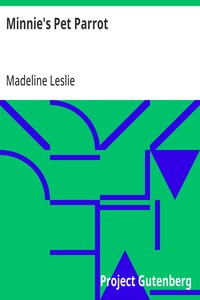
For Minnie's Pet Parrot — Inside the Classic, the stored edition analysis reports 12,745 words, 56 min estimated reading time, and 2 detected text sections.
The text analysis averages about 20.1 words per sentence, while the detected sections provide another way to judge how the source is divided.
Project Gutenberg metadata also associates the work with “Children -- Conduct of life -- Juvenile fiction,” connecting these edition facts with the source record’s subject description.
Explore this collection
These alternatives are selected using recorded categories and estimated reading time.
About 58 minutes
Childrens Adventures
13,267 recorded words. 2 minutes difference from this book's estimate.
View Gutenberg source #26616About 58 minutes
Childrens Adventures
13,157 recorded words. 2 minutes difference from this book's estimate.
View Gutenberg source #33240About 61 minutes
Childrens Adventures
13,914 recorded words. 5 minutes difference from this book's estimate.
View Gutenberg source #26620Search stored excerpts and compare books → Choose by your preferences →
Choices use stored catalog measurements. Estimates vary with reading speed. A shared category is a catalog label, not a claim that two books have the same argument or literary quality.
Search reads excerpt text stored with this catalog and links to its associated Gutenberg record. The connection is stored in the site database; this tool does not recheck that every excerpt is word-for-word identical to that external record. Excerpt search does not cover every chapter and does not verify historical publication dates.
Catalog snapshot checked: 2026-09-26. Coverage: 93 public books, 93 available source excerpts.
Calculated from edition completeness, EPUB availability, text structure and catalogue metadata. Not a user rating.
Total of 100 points, scaled to a 2.5-5.0 range. Editions with an empty description or a missing EPUB file are not scored.
Public-domain source text
The source text is kept in the dedicated reader, separate from this catalogue record and its commentary.
Madeline Leslie's Minnie's Pet Parrot (1864) opens with a domestic scene in which the young protagonist's enthusiasm for animals is immediately established through dialogue. The narrative voice alternates between a conversational tone—marked by exclamations like "Oh, dear! oh, dear me!"—and more formal passages that introduce natural history facts. This dual register reflects the book's stated aim: not to provide "full, scientific information" but to awaken interest and kindness toward animals. The excerpts show a careful structure: a framing story of Minnie and her family is punctuated by embedded anecdotes and descriptive lessons delivered by adult characters, such as Mr. Monson's detailed account of parrot physiology and behavior.
The excerpts reveal a deliberate shift in pace between lively dialogue and expository passages. In the dinner scene, rapid exchanges—"Papa, will you please to tell Minnie about Poll finding out who stole the bacon?"—create a sense of immediacy, while Mr. Monson's subsequent lecture slows the tempo with measured sentences: "The parrot is an insulated bird. Its manners and general structure... are different from any other bird." This alternation mirrors the book's pedagogical design: the child's curiosity drives the narrative forward, but the adult's explanations pause the action to deliver information. Leslie uses this rhythm to hold a young reader's attention, embedding facts within a relatable social context.
Character voices are distinguished by their diction and tone. Minnie's speech is eager and polite: "Yes, sir, I know that. Uncle Frank was going to bring me another parrot from South America, but mother thought one was enough." Her mother's remarks are measured and descriptive, as when she notes the parrot's "richly-tinted plumage" and the "most beautiful green to the richest mazarine blue." Mr. Monson adopts a scholarly yet affable tone, using terms like sui generis and explaining climbing mechanics. Lizzie's interjections—"Isn't papa a funny man?"—add a playful counterpoint. These varied voices prevent the factual content from becoming monotonous, giving the narrative a layered, conversational texture.
Several recurring details tie the excerpts together. The parrot's age—"ninety years" in the family—is mentioned twice, emphasizing longevity and continuity. The bird's feeding behavior, described as clearing a pea "with the greatest ease," reappears in the climbing description, reinforcing its unique anatomy. The setting shifts from the dining hall to the library, but the focus remains on oral storytelling: Minnie's desire to "hear stories about birds and beasts" drives the plot. These repeated motifs—age, feeding, storytelling—create cohesion across the fragmented text, suggesting that the complete book likely uses such anchors to unify its episodic structure.
Readers approaching Minnie's Pet Parrot should attend to how Leslie balances instruction with entertainment. The excerpts suggest that the book rewards attention to its shifts in register—from the child's spontaneous questions to the adult's measured explanations. The natural history details, drawn from sources like Jesse and Youatt, are woven into a domestic frame that gives them emotional weight. This editorial note is based solely on the provided excerpts; the full work may develop additional layers of moral or religious commentary hinted at in the introduction.
Sometimes a book stays with you less for its story and more for the quiet way it makes you notice the world—how Minnie's patient watching of her parrot taught me that wonder lives in slow details. That gentle, observant feeling reminds me of another old friend, Little Susy's Little Servants — Reading Companion, which lingers in the same soft corner of the heart.
Use these questions to collect your thoughts before moving on.