About 77 minutes
Briarwood Girls — Inside the Classic
Childrens Adventures
17,518 recorded words. 3 minutes difference from this book's estimate.
View Gutenberg source #34894
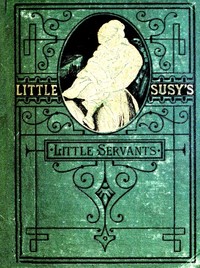
The catalog record for Little Susy's Little Servants — Reading Companion provides practical reading context through 18,373 words, 1 hr 20 min estimated reading time, and 3 detected text sections.
The text analysis averages about 16.8 words per sentence, while the detected sections provide another way to judge how the source is divided.
Project Gutenberg metadata also associates the work with “Conduct of life -- Juvenile fiction,” connecting these edition facts with the source record’s subject description.
Explore this collection
These alternatives are selected using recorded categories and estimated reading time.
About 77 minutes
Childrens Adventures
17,518 recorded words. 3 minutes difference from this book's estimate.
View Gutenberg source #34894About 68 minutes
Childrens Adventures
15,458 recorded words. 12 minutes difference from this book's estimate.
View Gutenberg source #26497About 92 minutes
Childrens Adventures
21,080 recorded words. 12 minutes difference from this book's estimate.
View Gutenberg source #28769Search stored excerpts and compare books → Choose by your preferences →
Choices use stored catalog measurements. Estimates vary with reading speed. A shared category is a catalog label, not a claim that two books have the same argument or literary quality.
Search reads excerpt text stored with this catalog and links to its associated Gutenberg record. The connection is stored in the site database; this tool does not recheck that every excerpt is word-for-word identical to that external record. Excerpt search does not cover every chapter and does not verify historical publication dates.
Catalog snapshot checked: 2026-09-26. Coverage: 93 public books, 93 available source excerpts.
Calculated from edition completeness, EPUB availability, text structure and catalogue metadata. Not a user rating.
Total of 100 points, scaled to a 2.5-5.0 range. Editions with an empty description or a missing EPUB file are not scored.
Public-domain source text
The source text is kept in the dedicated reader, separate from this catalogue record and its commentary.
The book begins with an extended metaphor: God gave Little Susy 'a great many servants of her own,' including black twins (eyes), a pair that slapped her (hands), restless fat twins (feet), and a useful pair for hearing (ears). This playful personification of body parts sets up a series of domestic vignettes where Susy learns to care for these 'servants.' The opening chapter establishes a direct address to the child reader, inviting them to ask their own mamma about the other servants not mentioned.
Rather than a continuous plot, the narrative proceeds through episodic lessons. In Chapter II, Susy strains her eyes stringing beads in dim light, prompting her father to scold her for 'abusing' her eyes and to give her a penknife she cannot yet use. The lesson is reinforced by a concrete object and a promise, not abstract reasoning.
The central conceit of Little Susy's Little Servants is that each part of the body is a servant God gave to Susy. The narrator describes them as twins: eyes are 'black, and so much alike that you could not tell one from the other'; hands are 'pretty, tiny little things' that 'used to slap and scratch her face'; feet are 'restless little fat things' that 'kick holes in blue and white socks'; ears are 'not very pretty, but very useful.' This domestic metaphor makes abstract concepts like self-care and bodily awareness tangible for a young child.
The metaphor is sustained throughout the excerpts. When Susy misuses her eyes by reading in poor light, her father says she has been 'abusing two of those servants that God gave you.' The servants are not just body parts but moral agents: they can be 'useless' if not trained, and they need to be 'tied up' (like hands) if they misbehave. This framing turns everyday actions into lessons in stewardship.
The excerpts show that Susy learns primarily through mishaps and parental correction, not through precept alone. In Chapter III, a visiting boy named Thomas persuades Susy to hold open a trunk lid while he searches for candy. The lid falls, injuring Thomas, who then lies, claiming Susy struck him with a stick. Susy's mother asks gravely, 'Is that true, Susy?'—the mere thought of deceit is a serious matter. The episode teaches the consequences of disobedience and falsehood without a lengthy sermon.
Similarly, the earlier bead-stringing incident ends not with a lecture but with a gift (a penknife) and a promise. The father's question—'If I gave you one, would it be right for you to cut off one of your little fingers with it?'—uses a concrete analogy to make the point about eye care. These scenes rely on physical objects and actions to convey moral lessons, a technique suited to a young audience.
The narrator frequently speaks directly to the reader, a common feature of didactic children's literature of the period. The opening sentence addresses 'you' directly: 'As Little Susy had a kind mamma to take care of her, you will, perhaps, wonder why God gave her also, a great many servants of her own.' The narrator then explains that the reader has the same servants and can ask their own mamma about them.
This technique creates a sense of shared experience between Susy and the reader. When the narrator says, 'Indeed, many a little baby has had them all covered up with white rags,' the 'them' refers to hands, and the reader is assumed to have been that baby. The direct address is not merely a stylistic choice; it positions the reader as a participant in Susy's moral education, invited to reflect on their own 'servants.'
The book's language reflects mid-19th-century American domestic piety. Words like 'mamma' and 'papa' are used consistently, and the father's role is to instruct through gentle reasoning and gifts. The mother is present but less active in the excerpts; the father takes Susy on his shoulder and 'rided' her across the room. The moral framework is explicitly Christian: God gives the servants, and the goal is to use them for His glory, as indicated by the catalog subject 'Glory of God.'
Period details include the 'blue and white socks' that feet kick holes in, the 'white-handled penknife,' and the trunk full of candy. These objects ground the story in a specific material world. The narrative also assumes a household with servants (the metaphor plays on this), and the child's world is bounded by family and visitors. The book's two series (ten chapters and nine chapters) suggest a structure of accumulating lessons, each focused on a different 'servant' or moral challenge.
The excerpts give a clear sense of the book's method: each chapter introduces a new 'servant' or a new situation where Susy must learn to use her body and conscience rightly. Readers should expect a series of self-contained episodes rather than a single plot. The moral lessons are embedded in concrete, everyday events—stringing beads, opening a trunk, playing with a visitor—and are reinforced by parental dialogue. The book rewards attention to how the metaphor of 'servants' is sustained and varied across chapters.
There’s something tender about Susy’s little servants, those hands and eyes that get into scrapes so gently, like the trunk lid falling softly on memory. I keep thinking how A Walk and a Drive. — Reading Notes holds that same quiet, unhurried noticing, the world slowed to a child’s pace. A Walk and a Drive. — Reading Notes feels like a neighboring room in the same old house, where the light comes in differently but just as warm. A small comfort, that.
Create a short personal record of your experience with this book.