About 80 minutes
Little Susy's Little Servants — Reading Companion
Childrens Adventures
18,373 recorded words. 3 minutes difference from this book's estimate.
View Gutenberg source #37219
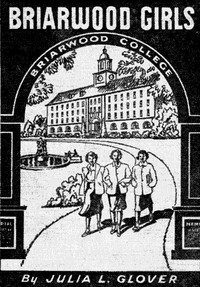
Briarwood Girls — Inside the Classic can be approached with a clearer sense of reading commitment from its source measurements: 17,518 words, 1 hr 17 min estimated reading time, and 2 detected text sections.
The text analysis averages about 15.0 words per sentence, while the detected sections provide another way to judge how the source is divided.
Project Gutenberg metadata also associates the work with “College students -- Juvenile fiction,” connecting these edition facts with the source record’s subject description.
Explore this collection
These alternatives are selected using recorded categories and estimated reading time.
About 80 minutes
Childrens Adventures
18,373 recorded words. 3 minutes difference from this book's estimate.
View Gutenberg source #37219About 68 minutes
Childrens Adventures
15,458 recorded words. 9 minutes difference from this book's estimate.
View Gutenberg source #26497About 64 minutes
Childrens Adventures
14,566 recorded words. 13 minutes difference from this book's estimate.
View Gutenberg source #26619Search stored excerpts and compare books → Choose by your preferences →
Choices use stored catalog measurements. Estimates vary with reading speed. A shared category is a catalog label, not a claim that two books have the same argument or literary quality.
Search reads excerpt text stored with this catalog and links to its associated Gutenberg record. The connection is stored in the site database; this tool does not recheck that every excerpt is word-for-word identical to that external record. Excerpt search does not cover every chapter and does not verify historical publication dates.
Catalog snapshot checked: 2026-09-26. Coverage: 93 public books, 93 available source excerpts.
Calculated from edition completeness, EPUB availability, text structure and catalogue metadata. Not a user rating.
Total of 100 points, scaled to a 2.5-5.0 range. Editions with an empty description or a missing EPUB file are not scored.
Public-domain source text
The source text is kept in the dedicated reader, separate from this catalogue record and its commentary.
Alison Fair learns she cannot return to Briarwood College because of family financial troubles, a predicament that sets the story in motion. The narrative quickly shifts from Alison's disappointment to the escapades of other students, particularly Marcia West and Rosalind Forrest, who sneak out to a party without permission. The catalog subjects list theft and roommates, but the excerpts focus on rule-breaking and moral dilemmas rather than actual theft. The pearl necklace Marcia wears—and later breaks—hints at a possible theft, but the excerpts do not confirm this. The story emphasizes emotional reactions and consequences over plot mechanics.
The opening chapter establishes Alison's distress over not returning to college, a situation driven by economic hardship rather than academic or social conflict. Her mother explains that "the pressure of hard times and financial stress" prevents her father from affording tuition. This detail grounds the story in a specific economic reality, contrasting with the later focus on social transgressions. Alison's attempt to be brave—"I'll try not to think of it or talk of it any more"—shows a character internalizing disappointment. However, after this initial scene, Alison largely disappears from the excerpts, and the narrative follows other girls. The catalog subject "Theft" does not appear in the opening; instead, the story begins with a personal crisis.
Marcia and Rosalind's unauthorized outing is the central incident in the excerpts. They climb over a wall, sneak back through a basement window, and are caught by a teacher who reports them to Miss Harland. The scene emphasizes the girls' fear and guilt: Rosalind "cried herself to sleep," while Marcia lies awake "wondering what she should" do. The broken pearl necklace—snapped in irritation—serves as a physical symbol of their fractured composure. Notably, the catalog subject "Theft" is not directly addressed; the necklace may be stolen, but the text does not confirm this. The story focuses on the emotional fallout of breaking rules rather than on property crime.
The narrator uses direct speech and internal reactions to convey moral conflict. Rosalind's prayer—"the first words of contrition brought tears"—and her envy of sleeping classmates highlight her guilt. Marcia, by contrast, deflects blame: "It's all your fault, Marcia," Rosalind accuses, and Marcia retorts, "You were very willing to listen." This exchange reveals a friendship strained by shared wrongdoing. The teacher's formal language—"I shall report you absent without leave"—contrasts with the girls' whispered panic. The catalog subject "Roommates" is plausible but not explicit; the girls are friends, not necessarily roommates. The excerpts show a story more concerned with conscience and consequence than with the catalog's suggested themes.
Readers should note that the excerpts cover only the first two chapters and a later scene; the full story may develop the theft plot hinted at by the necklace. The catalog subjects provide a framework, but the text emphasizes emotional realism over sensational events. Pay attention to how the author uses small details—a broken clasp, a tearful prayer—to build character and tension.
The rain kept me indoors with Briarwood Girls, and for all its pearl-necklace drama, what lingered was the ache of borrowed things. That afternoon, I put it down and drifted to something lighter on the shelf, A Book of Cheerful Cats and Other Animated Animals — Reading Notes, whose whiskered mischief felt like the quiet kindness after a storm.
A brief reflection can help important ideas stay with you longer.