About 186 minutes
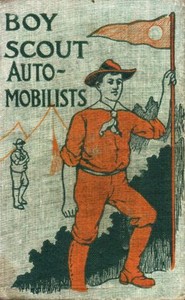
The Boy Scout Automobilists; Or, Jack Danby in the Woods — Reading Notes
Childrens Adventures
42,661 recorded words. 1 minutes difference from this book's estimate.
View Gutenberg source #26625
Before opening Penny Nichols and the Black Imp — Inside the Classic, the edition data offers a quick orientation: 42,941 words, 3 hr 7 min estimated reading time, and 6 detected text sections.
The text analysis averages about 11.1 words per sentence, while the detected sections provide another way to judge how the source is divided.
Project Gutenberg metadata also associates the work with “Detective and mystery stories,” connecting these edition facts with the source record’s subject description.
Explore this collection
These alternatives are selected using recorded categories and estimated reading time.
About 186 minutes
Childrens Adventures
42,661 recorded words. 1 minutes difference from this book's estimate.
View Gutenberg source #26625About 188 minutes
Childrens Adventures
43,049 recorded words. 1 minutes difference from this book's estimate.
View Gutenberg source #27983About 189 minutes
Childrens Adventures
43,467 recorded words. 2 minutes difference from this book's estimate.
View Gutenberg source #34441Search stored excerpts and compare books → Choose by your preferences →
Choices use stored catalog measurements. Estimates vary with reading speed. A shared category is a catalog label, not a claim that two books have the same argument or literary quality.
Search reads excerpt text stored with this catalog and links to its associated Gutenberg record. The connection is stored in the site database; this tool does not recheck that every excerpt is word-for-word identical to that external record. Excerpt search does not cover every chapter and does not verify historical publication dates.
Catalog snapshot checked: 2026-09-26. Coverage: 93 public books, 93 available source excerpts.
Calculated from edition completeness, EPUB availability, text structure and catalogue metadata. Not a user rating.
Total of 100 points, scaled to a 2.5-5.0 range. Editions with an empty description or a missing EPUB file are not scored.
Public-domain source text
The source text is kept in the dedicated reader, separate from this catalogue record and its commentary.
The opening chapter of Penny Nichols and the Black Imp introduces the heroine through her driving: a "slightly decrepit roadster" and a near-collision with a gray sedan whose driver ignores a stop sign. The prose is brisk, with dialogue that establishes Penny as competent and her friend Susan as cautious. The immediate goal is a private unveiling of a five-thousand-dollar statue at the Gage Galleries—a prize competition that sets the mystery in motion. The catalog subjects list "Artists -- Juvenile fiction" and "Art thieves -- Juvenile fiction," yet the excerpts focus less on artists than on insurance fraud, a missing pearl necklace, and a threatening figure named Max Lynch. The titular Black Imp appears only as a statuette that startles Lynch into fleeing. The story seems to intertwine two cases: the statue unveiling and Mrs. Dillon's allegedly stolen pearls.
Penny Nichols is introduced not as a passive observer but as an active driver. The roadster is "slightly decrepit," a detail that suggests her family is comfortable but not ostentatiously wealthy. Her father, Christopher Nichols, is a noted detective, and Penny has inherited his curiosity. When she learns of a five-thousand-dollar prize statue, she secures tickets through her father’s connections. The dialogue reveals her enthusiasm: "It isn’t every day that one has an opportunity to see a five thousand dollar statue unveiled." Susan, her friend, is more skeptical, providing a foil to Penny’s eagerness. The driving scene also establishes Penny’s skill—she brakes hard to avoid a collision—and her willingness to push limits, as when Susan warns her to slow down. This opening positions Penny as a resourceful, slightly impulsive protagonist, traits that will serve her in the mystery to come.
In a later excerpt, Penny discusses a case with her father: Mrs. Dillon’s lost pearl necklace, insured for fifteen thousand dollars. Penny notes that Mrs. Dillon had previously claimed the necklace was uninsured, a contradiction that raises suspicion. The detective muses that the robbery may have been planned, possibly by Mrs. Dillon herself. This subplot introduces themes of deception and financial motive, aligning with the catalog subject "Detective and mystery stories." The scene is interrupted by the arrival of Max Lynch, a man with a grudge against Christopher Nichols. Lynch is described as an expert on jewels who sometimes handles stolen gems. His reaction to the Black Imp statuette—he stares, then flees—suggests the object has a sinister significance. The excerpts do not reveal why Lynch is afraid, but the moment underscores the statue’s importance as a plot device.
The Black Imp itself appears only briefly in the provided text, yet it functions as a catalyst. When Max Lynch sees the figure on the desk, his confidence vanishes; he "hastily arose" and leaves without a word. Christopher Nichols instinctively reaches for his revolver, indicating the potential danger. The statue is not described in detail—its appearance, size, or material are omitted—but its effect on Lynch is immediate. This aligns with the catalog subject "Art thieves -- Juvenile fiction," though the excerpts do not confirm that the statue is stolen or that an art thief is involved. The title suggests the Black Imp is central, but the available text leaves its role ambiguous. Readers must infer its connection to the unfolding mystery, perhaps as a clue or a warning. The lack of description may be a deliberate narrative choice to maintain suspense.
The excerpts from Penny Nichols and the Black Imp offer a glimpse into a mystery that balances everyday details—a roadster, a friend’s caution—with elements of crime and intrigue. The catalog subjects point toward art theft and artists, but the text so far emphasizes insurance fraud and a menacing visitor. Readers should pay attention to how the Black Imp statuette connects the two threads, and whether Penny’s driving skills and detective instincts will be tested further. The story appears to be a straightforward juvenile mystery, with a capable heroine and a plot that rewards close observation.
I often think of Penny Nichols trailing that painted devil through gallery dust, and then my gaze wanders to A Book of Cheerful Cats and Other Animated Animals — Reading Notes. Both keep company with creatures that are not quite real. A menace, a whisker—each shelf holds its own quiet drama, patiently waiting for a reader's lamp.
Use these questions to collect your thoughts before moving on.