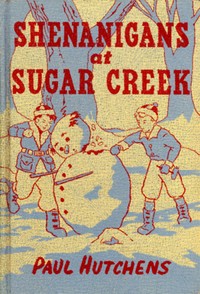
About 188 minutes
The Orphans of Glen Elder — A Closer Reading
Childrens Adventures
43,049 recorded words. 1 minutes difference from this book's estimate.
View Gutenberg source #27983
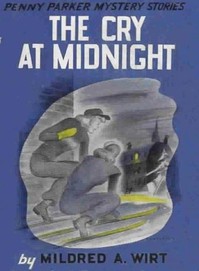
This digital edition of The Cry at Midnight — Themes and Context is described by source-level measurements including 43,467 words, 3 hr 9 min estimated reading time, and 7 detected text sections.
The text analysis averages about 10.3 words per sentence, while the detected sections provide another way to judge how the source is divided.
Project Gutenberg metadata also associates the work with “Adventure and adventurers -- Juvenile fiction,” connecting these edition facts with the source record’s subject description.
Explore this collection
These alternatives are selected using recorded categories and estimated reading time.
About 188 minutes
Childrens Adventures
43,049 recorded words. 1 minutes difference from this book's estimate.
View Gutenberg source #27983About 190 minutes
Childrens Adventures
43,596 recorded words. 1 minutes difference from this book's estimate.
View Gutenberg source #36388About 187 minutes
Childrens Adventures
42,941 recorded words. 2 minutes difference from this book's estimate.
View Gutenberg source #33382Search stored excerpts and compare books → Choose by your preferences →
Choices use stored catalog measurements. Estimates vary with reading speed. A shared category is a catalog label, not a claim that two books have the same argument or literary quality.
Search reads excerpt text stored with this catalog and links to its associated Gutenberg record. The connection is stored in the site database; this tool does not recheck that every excerpt is word-for-word identical to that external record. Excerpt search does not cover every chapter and does not verify historical publication dates.
Catalog snapshot checked: 2026-09-26. Coverage: 93 public books, 93 available source excerpts.
Calculated from edition completeness, EPUB availability, text structure and catalogue metadata. Not a user rating.
Total of 100 points, scaled to a 2.5-5.0 range. Editions with an empty description or a missing EPUB file are not scored.
Public-domain source text
The source text is kept in the dedicated reader, separate from this catalogue record and its commentary.
The opening chapter of The Cry at Midnight drops the reader into a moonlit ski run, not a detective's office. Penny Parker and Jerry Livingston race down Knob Hill, their skis carving 'herring-bone tracks' in the snow. The scene is brisk and sensory—'snow crystals were brilliant with light'—before a cry at midnight shifts the mood. The catalog subjects list 'Adventure and adventurers' and 'Women detectives,' but the excerpts show Penny first as an athlete, not an investigator. Her physical confidence on skis, her banter with Jerry, and her easy access to the Riverview Star newsroom establish a capable, connected protagonist. The mystery emerges gradually: a stranger, a forbidden monastery, and a crystal ball on page 44. The evidence suggests the story builds its suspense through setting and atmosphere rather than immediate action.
The excerpts reveal two distinct worlds that Penny Parker navigates with equal ease. On the slopes, she is physically adept, executing 'graceful, curving Christiania turns' and a 'spectacular jump-turn.' The snow is described with care—'unmarked save for the herring-bone tracks'—and the cold air feels present. In the newsroom, she shifts to a different kind of agility: negotiating with Editor DeWitt, who 'scowled as he rapidly scanned copy' and slashed pages with 'long scissors.' The contrast is sharp. Penny must convince DeWitt to assign her a story that two reporters have already failed to get. He agrees, but with a condition: 'Your father know you’re going?' The exchange is terse and professional, showing that Penny’s independence is not absolute. The carpenter Jake Cotton later provides another perspective, dismissing the monastery’s repairs as 'trivial things' while more important work waits. These details ground the mystery in everyday practicalities.
The monastery in The Cry at Midnight is less a religious house than a puzzle box. The excerpts never describe its interior in detail, but they hint at its secrets through small, telling details. Jake Cotton, the carpenter, mentions that the 'monks' had him fix a trivial item first, suggesting priorities that are not what they seem. The cult ceremony is mentioned but not explained; the 'high monkey-monk' (a dismissive nickname from a reporter) bars entry. Penny’s plan to get inside again implies she has already been there once, but the excerpts do not reveal what she saw. The crystal ball appears in the chapter list ('A Crystal Ball') and is referenced in the frontispiece caption, but its role is unclear. The setting is wintry—snow, footprints, a crevasse—and the chapter titles promise a descent into a crypt and a 'Chamber of the Dead.' The evidence suggests the monastery is a stage for hidden rooms and forbidden rituals, but the excerpts leave its true nature ambiguous.
The catalog subjects label The Cry at Midnight as a 'Mystery and detective story' featuring 'Women detectives' and 'Adventure and adventurers.' The excerpts support this, but they also reveal gaps. Penny is a high school student who works for her father’s newspaper, not a professional detective. Her methods are those of a reporter: asking questions, observing, and pushing past barriers. The 'adventure' is largely verbal—negotiating with editors, questioning a carpenter—rather than physical, though the chapter titles promise action later. The subject 'Parker, Penny (Fictitious character)' is accurate but reductive; the excerpts show her as a character defined by her relationships (with Jerry, her father, the housekeeper Mrs. Weems) and her environment (the snowy hills, the newsroom). The catalog does not capture the book’s atmospheric winter setting or its slow-burn suspense. Readers expecting a fast-paced detective story may be surprised by the emphasis on skiing and domestic scenes.
The Cry at Midnight rewards attention to small details: the carpenter’s offhand comment, the editor’s eyeshade, the way snow is described as 'brilliant with light.' The excerpts offer a partial view, but they suggest a mystery that unfolds through observation and persistence rather than sudden revelations. Penny Parker is a protagonist who moves between worlds—the slope, the newsroom, the home—and the monastery is another world she must learn to read. The evidence does not reveal the full plot, but it establishes a tone of wintry curiosity and quiet determination.
There’s something about Penny skiing past that monastery gate that reminds me of Dorothy’s drifting dream—both girls crossing into a place where the rules of daylight don’t quite hold. I found myself thinking of that older story’s gentle strangeness, how it lingers like frost on a windowpane. Some mysteries, even quiet ones, seem to call across the years, don’t they? A Flight with the Swallows; Or, Little Dorothy's Dream — Story, Setting & Ideas holds that same hush.
Create a short personal record of your experience with this book.