About 182 minutes
A Yankee Flier in Italy — Edition Insights
Childrens Adventures
41,713 recorded words. 0 minutes difference from this book's estimate.
View Gutenberg source #32288
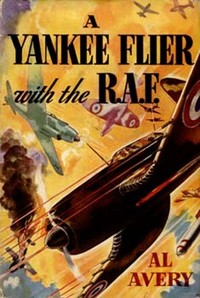
For A Yankee Flier with the R.A.F. — Context and Discussion, the stored edition analysis reports 41,707 words, 3 hr 2 min estimated reading time, and 5 detected text sections.
The text analysis averages about 12.2 words per sentence, while the detected sections provide another way to judge how the source is divided.
Project Gutenberg metadata also associates the work with “War stories,” connecting these edition facts with the source record’s subject description.
Explore this collection
These alternatives are selected using recorded categories and estimated reading time.
About 182 minutes
Childrens Adventures
41,713 recorded words. 0 minutes difference from this book's estimate.
View Gutenberg source #32288About 184 minutes
Childrens Adventures
42,285 recorded words. 2 minutes difference from this book's estimate.
View Gutenberg source #26875About 186 minutes
Childrens Adventures
42,661 recorded words. 4 minutes difference from this book's estimate.
View Gutenberg source #26625Search stored excerpts and compare books → Choose by your preferences →
Choices use stored catalog measurements. Estimates vary with reading speed. A shared category is a catalog label, not a claim that two books have the same argument or literary quality.
Search reads excerpt text stored with this catalog and links to its associated Gutenberg record. The connection is stored in the site database; this tool does not recheck that every excerpt is word-for-word identical to that external record. Excerpt search does not cover every chapter and does not verify historical publication dates.
Catalog snapshot checked: 2026-09-26. Coverage: 93 public books, 93 available source excerpts.
Calculated from edition completeness, EPUB availability, text structure and catalogue metadata. Not a user rating.
Total of 100 points, scaled to a 2.5-5.0 range. Editions with an empty description or a missing EPUB file are not scored.
Public-domain source text
The source text is kept in the dedicated reader, separate from this catalogue record and its commentary.
The opening pages of A Yankee Flier with the R.A.F. establish a distinctive narrative rhythm that alternates between the casual camaraderie of the mess hall and the sudden, violent intensity of aerial combat. Montgomery introduces Stan Wilson through a series of sensory details—the blaring swing music, the blackout curtains, the whine of bombers—that ground the reader in the wartime atmosphere. The prose moves quickly from Stan's internal reflections to sharp dialogue, as when March Allison's “cool, gray eyes” meet Stan's with “insolent mockery.” This initial tension between the American protagonist and the British Flight Lieutenant sets up a dynamic that the story will revisit.
Montgomery distinguishes his characters primarily through their speech patterns. Stan Wilson's internal monologue is measured and self-aware—he notes that “there was seldom a moment so danger-filled that Stan Wilson could not laugh at himself.” In contrast, the Irish gunner O'Malley speaks in a lyrical brogue, calling the Hawk fighter plane “a dainty colleen” and humming Irish melodies during missions. The Scottish McCumber is “silent,” while Tommy Lane “never ceased to whistle tavern tunes.” These vocal tics are not merely decorative; they serve as shorthand for each man's temperament. The dialogue also carries the story's exposition, as when O'Malley mutters about being “coddled” or when Stan warns him not to “go wild” with the aircraft. The reader learns the stakes through these exchanges rather than through authorial summary.
The narrative structure relies on abrupt transitions from routine to emergency. A typical sequence begins with mundane details—a motor idling smoothly, a sergeant saluting—then shifts in a single sentence: “Then everything changed in a flash.” Montgomery uses short, staccato sentences to convey the chaos of battle: “Boom! Boom! Boom!” and “One got a hit squarely on its foredeck and rolled half around, wallowing in the trough.” The contrast between O'Malley's relaxed humming and the sudden shout of “Naval battle! Naval battle!” creates a jarring effect that mirrors the fliers' own experience. The excerpts show that the author favors action over reflection during combat scenes, relying on sound effects and visual fragments—foaming water, smoke, flame—rather than extended analysis.
Montgomery embeds aviation terminology naturally into the prose, reinforcing the professional milieu. Terms like “cab rank,” “Spitfire flight,” “cantilever wings,” “Double-Wasp motor,” and “intercom telephone” appear without explanation, assuming a reader familiar with the equipment or willing to infer meaning from context. The description of the Hawk's “many-colored coat of sky paint” and the mechanics of takeoff—revving up, pinching a brake, kicking the throttle—ground the action in technical reality. This jargon serves a dual purpose: it authenticates the fliers' expertise and creates a barrier between the characters and the uninitiated reader, emphasizing the specialized world they inhabit. The narrative voice never condescends to explain these terms, treating them as part of the characters' natural vocabulary.
Readers approaching this 1941 adventure should attend to how Montgomery uses the contrast between Stan's American perspective and the British setting to generate both humor and tension. The excerpts suggest a story that values action over introspection, with dialogue carrying much of the characterization. The frequent shifts in pace—from idle banter to sudden violence—are the book's primary narrative engine, and the technical details reward a reader willing to track the aircraft and tactics. The incomplete excerpts leave the full arc of Stan's service unclear, but the pattern of calm interrupted by crisis is established early and consistently maintained.
Reading how Stan and O’Malley trade jabs between scrambles, I couldn’t help thinking of those earlier boys in the French cockpits, their own slang and courage just as raw. There’s a quiet ache in that contrast—how quickly young voices became old war stories. The Boy Volunteers with the French Airmen — Context and Discussion carries that same fleeting, unpolished humanity. Almost like overhearing a distant echo of the mess hall, long after the lights went out.
Answer a few questions and save a private reflection on this device.