About 390 minutes
The Inglises; Or, How the Way Opened — A Closer Reading
Childrens Adventures
89,534 recorded words. 5 minutes difference from this book's estimate.
View Gutenberg source #28179
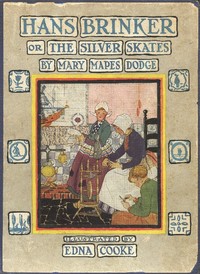
For Hans Brinker; Or, The Silver Skates — Themes and Context, the stored edition analysis reports 88,380 words, 6 hr 25 min estimated reading time, and 11 detected text sections.
The text analysis averages about 16.1 words per sentence, while the detected sections provide another way to judge how the source is divided.
Project Gutenberg metadata also associates the work with “Siblings -- Juvenile fiction,” connecting these edition facts with the source record’s subject description.
Explore this collection
These alternatives are selected using recorded categories and estimated reading time.
About 390 minutes
Childrens Adventures
89,534 recorded words. 5 minutes difference from this book's estimate.
View Gutenberg source #28179About 377 minutes
Childrens Adventures
86,578 recorded words. 8 minutes difference from this book's estimate.
View Gutenberg source #35985About 396 minutes
Childrens Adventures
90,871 recorded words. 11 minutes difference from this book's estimate.
View Gutenberg source #35178Search stored excerpts and compare books → Choose by your preferences →
Choices use stored catalog measurements. Estimates vary with reading speed. A shared category is a catalog label, not a claim that two books have the same argument or literary quality.
Search reads excerpt text stored with this catalog and links to its associated Gutenberg record. The connection is stored in the site database; this tool does not recheck that every excerpt is word-for-word identical to that external record. Excerpt search does not cover every chapter and does not verify historical publication dates.
Catalog snapshot checked: 2026-09-26. Coverage: 93 public books, 93 available source excerpts.
Calculated from edition completeness, EPUB availability, text structure and catalogue metadata. Not a user rating.
Total of 100 points, scaled to a 2.5-5.0 range. Editions with an empty description or a missing EPUB file are not scored.
Public-domain source text
The source text is kept in the dedicated reader, separate from this catalogue record and its commentary.
Mary Mapes Dodge's preface declares a dual aim: to combine "the instructive features of a book of travels with the interest of a domestic tale." This tension between instruction and story shapes the entire work. The opening letter from Holland, dated July 30, 1873, directly addresses young readers with a lively, conversational tone, describing crooked houses, wooden shoes, and windmills. Yet it also warns of hazards—canals and lumbering wagons—blending travelogue with a protective, almost parental voice. The domestic tale, centered on the Brinker family, is thus framed by a broader geographical and historical context that Dodge insists is "scrupulously" accurate.
In one excerpt, two characters—Ben and Lambert—debate the relative heroism of the sieges of Leyden and Haarlem. Ben argues that Haarlem "brought out a braver, more heroic resistance" than Leyden, citing women who "fought gallantly beside their husbands and fathers" under Kanau Hesselaer, a figure he compares to Joan of Arc. Lambert, by contrast, admits to having "a very indistinct idea of historical matters." This exchange does not merely convey facts; it dramatizes how history is interpreted and contested. Ben's detailed account of the Haarlem massacre—where the Duke of Alva ordered "mercy to none"—serves as a moral lesson, with Ben condemning Alva as "about the worst specimen of a man that ever lived." The passage thus embeds historical instruction within a character-driven conversation, illustrating Dodge's method of weaving pedagogy into narrative.
The letter from Holland employs a direct, engaging second-person address: "If you all could be here with me to-day, what fine times we might have." This device creates intimacy while also managing reader expectations—the writer acknowledges the impossibility of actual travel ("not even the spirit of the Dutch... can bring you at this moment across the ocean") and playfully warns of dangers like falling into canals. The descriptions are concrete and sensory: "crooked houses, standing with their gable ends to the street," "little slanting mirrors fastened outside of the windows," "wooden shoes and dog-carts." Yet the voice remains that of a guide who is both knowledgeable and slightly anxious about her audience's safety. This blend of enthusiasm and caution mirrors the preface's stated desire to "free them from certain current prejudices" while maintaining a protective tone.
Dodge grounds her story in specific, verifiable claims. The preface states that "the story of Raff Brinker is founded strictly upon fact," and that descriptions of "Dutch localities, customs, and general characteristics" have been given "with scrupulous care." She thanks "kind Holland friends" who helped her see the country "as it looked twenty years ago." This emphasis on authenticity extends to the narrative's domestic scenes: the Brinker home is described as standing "unnoticed in sunlight and shadow," a phrase that suggests both ordinariness and careful observation. The domestic tale is thus presented not as mere fiction but as a window into a real place and time. The reader is invited to trust that the details—from wooden shoes to canal-side life—are accurate, even as the story itself follows a fictional family.
Readers attentive to Dodge's method will notice how she shifts between the intimate domestic sphere and the expansive historical travelogue. The preface's prayer—that the book might "aid any in weaving a life, wherein, through knots and entanglements, the golden thread shall never be tarnished or broken"—suggests a moral purpose that underlies both modes. As you read, consider how the historical debates and descriptive passages serve not only to inform but also to shape the characters' values and choices. The silver skates themselves, though central to the plot, are part of a larger design that balances instruction with narrative pleasure.
Reading the preface to Hans Brinker, I kept thinking about that quieter moment in The Inglises; Or, How the Way Opened — A Closer Reading — the way both books hold a family’s small warmth inside a wider, harsher landscape. Dodge’s letter from Holland feels less like travelogue, more like someone remembering home. It reminded me of how the Inglises’ parlor glows, even when the snow piles high outside the windows.
Create a short personal record of your experience with this book.