About 199 minutes
Phil Bradley's Snow-shoe Trail; Or, The Mountain Boys in the Canada Wilds — Edition Insights
Childrens Adventures
45,636 recorded words. 4 minutes difference from this book's estimate.
View Gutenberg source #38970
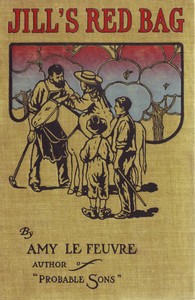
Jill's Red Bag — A Closer Reading can be approached with a clearer sense of reading commitment from its source measurements: 44,776 words, 3 hr 15 min estimated reading time, and 6 detected text sections.
The text analysis averages about 12.4 words per sentence, while the detected sections provide another way to judge how the source is divided.
Project Gutenberg metadata also associates the work with “Christian life -- Juvenile fiction,” connecting these edition facts with the source record’s subject description.
Explore this collection
These alternatives are selected using recorded categories and estimated reading time.
About 199 minutes
Childrens Adventures
45,636 recorded words. 4 minutes difference from this book's estimate.
View Gutenberg source #38970About 190 minutes
Childrens Adventures
43,596 recorded words. 5 minutes difference from this book's estimate.
View Gutenberg source #36388About 189 minutes
Childrens Adventures
43,467 recorded words. 6 minutes difference from this book's estimate.
View Gutenberg source #34441Search stored excerpts and compare books → Choose by your preferences →
Choices use stored catalog measurements. Estimates vary with reading speed. A shared category is a catalog label, not a claim that two books have the same argument or literary quality.
Search reads excerpt text stored with this catalog and links to its associated Gutenberg record. The connection is stored in the site database; this tool does not recheck that every excerpt is word-for-word identical to that external record. Excerpt search does not cover every chapter and does not verify historical publication dates.
Catalog snapshot checked: 2026-09-26. Coverage: 93 public books, 93 available source excerpts.
Calculated from edition completeness, EPUB availability, text structure and catalogue metadata. Not a user rating.
Total of 100 points, scaled to a 2.5-5.0 range. Editions with an empty description or a missing EPUB file are not scored.
Public-domain source text
The source text is kept in the dedicated reader, separate from this catalogue record and its commentary.
The opening scene of Jill's Red Bag immediately establishes a boisterous, morally ambiguous tone. Jack is tormenting his younger sister Winnie, whom he has bound with household linens, declaring it a 'proper Sunday game' of early Christian martyrdom. Jill, initially disapproving, quickly joins in when the prospect of filling a bath with water arises. The narrator notes a 'twinkle of amusement' in Jill's eyes, signaling that her scruples are easily overridden by the promise of fun. This swift shift from objection to complicity, rendered in brisk dialogue and physical comedy, sets up a central tension: the children's energetic mischief constantly collides with adult expectations of piety and order.
Le Feuvre gives each child a distinct verbal register. Jack speaks in commands and boasts: 'Get away! She's an early Christian, and I'm seeing if she's a real one.' His language is theatrical and domineering. Jill, by contrast, uses questions and exclamations that reveal her impulsive nature: 'Where's the river?' and 'I'll make you if you don't!' Winnie, called Bumps, is largely silent in the excerpt, her suffering conveyed through physical description rather than speech. The narrator's interjections—'When Jack was defiant, Jill knew it was a hopeless case'—provide a wry commentary that distances the reader from the children's perspective while still capturing their vernacular. This layered diction creates a sense of authenticity without romanticizing the children's behavior.
The narrative proceeds through a series of episodic trials, each framed by a child's literal interpretation of religious or moral precepts. In one excerpt, Jill resolves to be 'wonderfully good' and consults her Bible, asking an under-gardener for the 'very goodest thing to do.' He quotes James 1:27 about visiting widows and orphans. Jill then embarks on a literal visitation campaign, only to be rebuffed by a widow who slams the door and to trigger tears in another by mentioning her 'fatherless' children. The structure mirrors a picaresque: each good intention leads to comic or awkward failure, and the narrator records the outcome without overt moralizing. This pattern—resolve, action, unintended consequence—recurs throughout the excerpts, suggesting a deliberate narrative architecture.
The physical settings in the excerpts are not mere backdrops but active elements in the moral drama. The nursery, cluttered with 'furniture, toys, and miscellaneous articles,' reflects the chaos of the children's impulses. Jill's journey to visit widows takes her 'across fields and down lanes,' growing 'more tired and heated every step.' The cottages she visits are sharply differentiated: Mrs. Jonas's is shunned for its dirt and thriftlessness; Mrs. Drake's farmhouse contains a wash-tub and a grieving young woman. The contrast between the ordered, supervised spaces of the house and the unpredictable, unsupervised outdoors underscores the children's negotiation between obedience and autonomy. Le Feuvre uses setting to externalize internal conflicts, making the physical world a testing ground for moral choices.
Several details recur across the excerpts, hinting at larger patterns. The 'red bag' of the title is not mentioned in the provided text, but other objects carry symbolic weight: the Bible that Jill retrieves, the stamps Jack sticks into his album, the 'antimacassars and pocket-handkerchiefs' used as bonds. These domestic items are repurposed for play or piety, blurring the line between sacred and profane. The motif of binding and unbinding appears in the opening scene's gags and towels, and later in Jill's self-imposed 'solemn vow' to be good. The phrase 'running in a straight road' (from an earlier chapter) is echoed in Jill's conscience telling her that avoiding Mona's summons would not be 'running in a straight road.' Such verbal echoes suggest a careful attention to thematic coherence, even as the plot proceeds by fits and starts.
Readers attentive to Le Feuvre's craft will notice how she balances didactic intent with a sharp ear for childish speech and a willingness to let scenes conclude without tidy resolutions. The children's misapplications of adult doctrine are played for both humor and pathos, and the narrator's tone—sympathetic but never sentimental—invites the reader to observe rather than judge. This editorial note has focused on the evidence of the excerpts; the full novel may extend or complicate these patterns.
What stayed with me about Jill's Red Bag was how quietly her impulsive choices echo long after the scene ends, like a stone dropped in still water. That same lingering ache for consequences felt familiar reading The Cry at Midnight — Themes and Context. There’s a tenderness in watching characters trip over their own goodness, and I keep thinking about that.
Capture what you thought, learned, and would like to remember.