About 291 minutes
Marching on Niagara; Or, The Soldier Boys of the Old Frontier — Reading Notes
Childrens Adventures
66,857 recorded words. 14 minutes difference from this book's estimate.
View Gutenberg source #34355
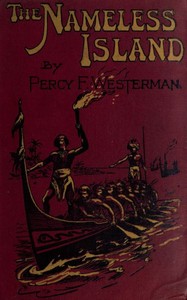
This digital edition of The Nameless Island: A Story of Some Modern Robinson Crusoes — Edition Insights is described by source-level measurements including 70,069 words, 5 hr 5 min estimated reading time, and 9 detected text sections.
The text analysis averages about 15.9 words per sentence, while the detected sections provide another way to judge how the source is divided.
Project Gutenberg metadata also associates the work with “Shipwreck survival -- Juvenile fiction,” connecting these edition facts with the source record’s subject description.
Explore this collection
These alternatives are selected using recorded categories and estimated reading time.
About 291 minutes
Childrens Adventures
66,857 recorded words. 14 minutes difference from this book's estimate.
View Gutenberg source #34355About 288 minutes
Childrens Adventures
66,149 recorded words. 17 minutes difference from this book's estimate.
View Gutenberg source #30825About 286 minutes
Childrens Adventures
65,670 recorded words. 19 minutes difference from this book's estimate.
View Gutenberg source #30881Search stored excerpts and compare books → Choose by your preferences →
Choices use stored catalog measurements. Estimates vary with reading speed. A shared category is a catalog label, not a claim that two books have the same argument or literary quality.
Search reads excerpt text stored with this catalog and links to its associated Gutenberg record. The connection is stored in the site database; this tool does not recheck that every excerpt is word-for-word identical to that external record. Excerpt search does not cover every chapter and does not verify historical publication dates.
Catalog snapshot checked: 2026-09-26. Coverage: 93 public books, 93 available source excerpts.
Calculated from edition completeness, EPUB availability, text structure and catalogue metadata. Not a user rating.
Total of 100 points, scaled to a 2.5-5.0 range. Editions with an empty description or a missing EPUB file are not scored.
Public-domain source text
The source text is kept in the dedicated reader, separate from this catalogue record and its commentary.
The first chapter of The Nameless Island opens not on the island but aboard the San Martin, a deteriorating Peruvian tramp steamer. Westerman establishes a pattern of movement between vessel and shore that will recur throughout the book: the hurricane scene shifts from the steamer to a yawl, then to the reef, and finally to the island itself. The author’s attention to nautical detail—the “staysail burst asunder,” the “glistening coral” in the trough of waves—grounds the adventure in specific, tactile hazards. This opening sequence also introduces a moral contrast: the Spanish captain, Antonio Perez, is described as “swarthy, greasy,” while the British characters, including the resourceful Mr. McKay, are defined by their competence and self-sacrifice, as when McKay lashes a lifebelt around his would-be murderer.
The narrative structure hinges on a series of transitions from sea to land. After the yawl is wrecked on the reef, the survivors must establish a camp—a process that occupies several chapters. Westerman devotes careful description to the construction of shelters, the sourcing of food, and the creation of tools, echoing the Robinsonade tradition. Yet the movement is not linear: the castaways repeatedly return to the wreck or venture along the coast, and later chapters involve voyages back to the island after attempted escapes. This back-and-forth rhythm gives the story a restless quality, as if the island is a trap that must be constantly re-entered.
Two images recur with notable frequency: the British ensign and the coral reef. The frontispiece shows the ensign being “broken at the masthead,” and the flag appears as a symbol of claimed territory and imperial identity. The reef, meanwhile, is described in visceral terms: it “showed its teeth” and “bares itself to strike.” These images are not merely decorative; they structure the plot. The reef is the initial obstacle to survival, and later it becomes a defensive barrier against invaders. The flag, raised during a ceremony, marks the island as British space, a move that anticipates later conflicts with “savages” and buccaneers.
Westerman orchestrates a constant oscillation between moments of extreme danger and brief respites. The hurricane chapter is a sustained crisis, but even after landing, the characters face sharks, a bull, and a knife-thrust in the dark. The chapter titles themselves trace this pattern: “Aground,” “Abandoned,” “The Landing,” then “Unwelcome Visitors,” “At Bay,” “The Frustrated Sacrifice.” The camp is never truly safe; alarms are triggered by turtles crawling across the beach. This rhythm keeps the reader off-balance, as no location—ship, yawl, camp, or cave—offers lasting security. The only constant is the need to move, to repair, to defend.
Unlike many Robinsonades that focus on a single hero, The Nameless Island distributes agency among a group: the injured Ellerton, the stalwart Mr. McKay, the loyal Terence, the reformed prisoner Blight. Westerman uses dialogue and action to differentiate them, but the narrative rarely lingers on interiority. Instead, the group acts as a unit, with tasks divided and reassigned. This collective focus is reinforced by the structure: chapters alternate between different characters’ perspectives, but the point of view remains external. The result is a story that emphasizes teamwork and resourcefulness over individual psychology, fitting for a boys’ adventure serial.
Readers approaching The Nameless Island should attend to the way Westerman builds suspense through spatial movement—from ship to reef to camp to cave—and through the repetition of key images like the flag and the reef. The book rewards attention to its practical details: how a lifebelt is fastened, how a yawl is handled in a gale, how an alarm bell is rigged. These specifics, rather than character development, drive the narrative forward. The island remains nameless, but its geography is drawn with enough precision to make each journey across it feel consequential.
Some evenings, I think of Westerman's castaways, their plucky alarms and planted flags, and then my gaze drifts to the darker Congo river. Both books whisper of young men thrown upon indifferent landscapes, learning the sharp weight of solitude and empire’s uneasy shadow. One fires the imagination; the other, quieter, haunts it. I keep them side by side, a strange, honest pair. Samba: A Story of the Rubber Slaves of the Congo — Reading Companion holds a different, more somber truth.
A brief reflection can help important ideas stay with you longer.