About 282 minutes
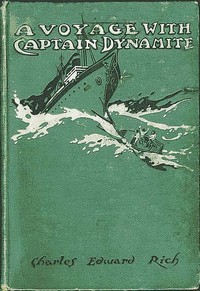
A Voyage with Captain Dynamite — Themes and Context
Fairy Moral Tales
64,687 recorded words. 90 minutes difference from this book's estimate.
View Gutenberg source #25144
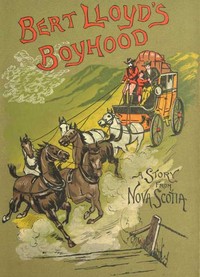
Before opening Bert Lloyd's Boyhood: A Story from Nova Scotia — Key Ideas to Explore, the edition data offers a quick orientation: 85,378 words, 6 hr 12 min estimated reading time, and 9 detected text sections.
The text analysis averages about 20.8 words per sentence, while the detected sections provide another way to judge how the source is divided.
Project Gutenberg metadata also associates the work with “Christian life -- Juvenile fiction,” connecting these edition facts with the source record’s subject description.
Explore this collection
These alternatives are selected using recorded categories and estimated reading time.
About 282 minutes
Fairy Moral Tales
64,687 recorded words. 90 minutes difference from this book's estimate.
View Gutenberg source #25144About 268 minutes
Fairy Moral Tales
61,574 recorded words. 104 minutes difference from this book's estimate.
View Gutenberg source #25079About 217 minutes
Fairy Moral Tales
49,687 recorded words. 155 minutes difference from this book's estimate.
View Gutenberg source #25143Search stored excerpts and compare books → Choose by your preferences →
Choices use stored catalog measurements. Estimates vary with reading speed. A shared category is a catalog label, not a claim that two books have the same argument or literary quality.
Search reads excerpt text stored with this catalog and links to its associated Gutenberg record. The connection is stored in the site database; this tool does not recheck that every excerpt is word-for-word identical to that external record. Excerpt search does not cover every chapter and does not verify historical publication dates.
Catalog snapshot checked: 2026-09-26. Coverage: 93 public books, 93 available source excerpts.
Calculated from edition completeness, EPUB availability, text structure and catalogue metadata. Not a user rating.
Total of 100 points, scaled to a 2.5-5.0 range. Editions with an empty description or a missing EPUB file are not scored.
Public-domain source text
The source text is kept in the dedicated reader, separate from this catalogue record and its commentary.
J. Macdonald Oxley's preface to Bert Lloyd's Boyhood frames the novel as a deliberate act of recollection: he drew on his own school-days in Nova Scotia a fifth of a century earlier, striving to depart as slightly as possible from personal experience. Yet the same preface also acknowledges a broader ambition—to reach readers across the border and beyond the ocean in the Motherland. This tension between local authenticity and imperial audience shapes the narrative's handling of setting, conflict, and moral instruction.
Oxley's preface insists that the story is rooted in personal memory, yet it also reveals a calculated literary strategy. He notes that Canada had not yet attained a stage of development enabling her to support a literature of her own, and that doors of opportunity stood open in the United States and Britain. The novel thus functions as both a record of Nova Scotian boyhood and a bid for transatlantic recognition. The contents list—with chapters titled 'Fireman or Soldier,' 'Temptation and Triumph,' and 'An Honourable Scar'—suggests a didactic arc typical of Victorian children's fiction, but the preface's emphasis on personal experience invites readers to treat the episodes as authentic rather than invented.
The extended fight scene between Bert and Rod Graham is the most detailed excerpt available. Oxley describes Bert's strategy—no attempt to defend himself, but rushing into close quarters with swinging blows—and the aftermath: Bert's forehead is swollen, Rod's eyes blackened. The schoolmaster, Dr. Johnston, responds with a sardonic smile and the line 'Ah, Graham, I see Lloyd has been writing his autograph on you,' then commands them to shake hands. Bert's parents, after hearing the story, agree that under the circumstances he could not have acted otherwise. The fight is presented as a necessary assertion of courage, but also as a test of moral judgment: Bert's father hopes it will be his last, urging him to sustain his reputation in other ways. The episode also introduces Dick Wilding, a wealthy, spoiled boy who becomes Bert's ally, hinting at class dynamics within the school.
The catalog subjects place the novel in Halifax, Nova Scotia, and the preface confirms that Oxley aimed to picture boy life in that city. Yet the narrative's moral framework—Christian life, friendship, the value of courage—aligns with conventions of Victorian adventure and school stories popular in Britain and America. The fight scene, for instance, echoes the public-school ethos of Tom Brown's Schooldays, but with a distinct colonial inflection: Bert's victory earns him an ovation from schoolmates, and the doctor's intervention restores order without punishment. Oxley's decision to include a preface addressing an audience in the 'old home' suggests that the novel's local details—the coach ride, grandfather's farm, the Halifax setting—are meant to be exotic yet familiar to readers abroad, a balancing act between regional specificity and generic appeal.
Readers approaching Bert Lloyd's Boyhood should attend to how Oxley negotiates between personal recollection and literary convention. The fight scene, the preface's dual address, and the episodic chapter structure all point to a work that is at once a memoir of Nova Scotian boyhood and a bid for a place in the broader Anglo-American children's market. The excerpts leave the full arc of Bert's development unclear, but they establish a pattern of moral testing and social integration that rewards close attention to the interplay of local detail and generic form.
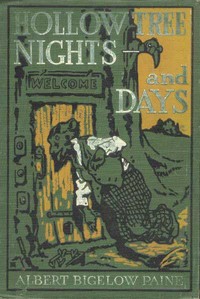
That rainy afternoon, Bert's scraped knuckles and Oxley's careful moralizing made me homesick for a quieter kind of story. The Atlantic in that novel felt vast and cold, all duty and empire. Later, I stumbled onto Hollow Tree Nights and Days — A Reader’s Guide, and it simply softened the memory. Different geography, same lonesome light. Everything just felt a little gentler afterward.
Use these questions to collect your thoughts before moving on.