About 282 minutes
A Voyage with Captain Dynamite — Themes and Context
Fairy Moral Tales
64,687 recorded words. 14 minutes difference from this book's estimate.
View Gutenberg source #25144
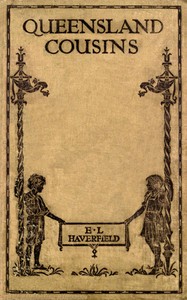
The catalog record for Queensland Cousins — Key Ideas to Explore provides practical reading context through 61,574 words, 4 hr 28 min estimated reading time, and 7 detected text sections.
The text analysis averages about 14.5 words per sentence, while the detected sections provide another way to judge how the source is divided.
Project Gutenberg metadata also associates the work with “Australia -- Juvenile fiction,” connecting these edition facts with the source record’s subject description.
Explore this collection
These alternatives are selected using recorded categories and estimated reading time.
About 282 minutes
Fairy Moral Tales
64,687 recorded words. 14 minutes difference from this book's estimate.
View Gutenberg source #25144About 217 minutes
Fairy Moral Tales
49,687 recorded words. 51 minutes difference from this book's estimate.
View Gutenberg source #25143About 214 minutes
Fairy Moral Tales
49,026 recorded words. 54 minutes difference from this book's estimate.
View Gutenberg source #24578Search stored excerpts and compare books → Choose by your preferences →
Choices use stored catalog measurements. Estimates vary with reading speed. A shared category is a catalog label, not a claim that two books have the same argument or literary quality.
Search reads excerpt text stored with this catalog and links to its associated Gutenberg record. The connection is stored in the site database; this tool does not recheck that every excerpt is word-for-word identical to that external record. Excerpt search does not cover every chapter and does not verify historical publication dates.
Catalog snapshot checked: 2026-09-26. Coverage: 93 public books, 93 available source excerpts.
Calculated from edition completeness, EPUB availability, text structure and catalogue metadata. Not a user rating.
Total of 100 points, scaled to a 2.5-5.0 range. Editions with an empty description or a missing EPUB file are not scored.
Public-domain source text
The source text is kept in the dedicated reader, separate from this catalogue record and its commentary.
The opening pages of Queensland Cousins establish a crowded veranda and a parcel from England as the immediate focus. Three children—Nesta, Eustace, and a toddler named Becky—clamour for their father’s attention, their dialogue peppered with exclamations and interruptions. The narrative voice is brisk, favouring short exchanges and physical gestures: heads thrust over railings, a mother sewing patiently, a father spurring his horse. This domestic scene, with its emphasis on waiting and impatience, sets a tone of contained energy that will later give way to more isolated, perilous episodes.
The early chapters move at a conversational clip, with dialogue carrying much of the action. Nesta’s retort—“Oh, shut up!”—and her twin Eustace’s methodical teasing create a rhythm of quick exchanges. The narrator seldom lingers on description; even the arrival of the parcel is handled through exclamation and gesture rather than extended reflection. This pace changes markedly when Eustace finds himself alone among an unfamiliar group. The sentences lengthen, and the focus turns inward: “Eustace was wondering drearily how long they would stand staring at him.” The shift from spoken banter to silent observation signals a change in the story’s tempo, from communal chatter to solitary waiting.
Once Eustace is separated from his family, the narration adopts a more restricted point of view. His thoughts are rendered in short, anxious questions: “Were they cannibals these people?” and “But what is going to happen to me?” The dialogue of the captors is not translated—the chief’s speech is described only as “something with many gesticulations.” This choice keeps the reader inside Eustace’s confusion. The physical details that do appear—the chief’s painted stripes, the smell of cooking—are filtered through the boy’s hunger and fear. The narrative voice becomes less assured, mirroring his loss of control.
Waiting structures both the opening and the captivity scenes. In the first chapter, the children wait an hour for their father; later, Eustace waits to see what his captors will do. The verb “stared” recurs: the children stare over the railing, the native people stare at Eustace “as if he were a monkey in a cage at the Zoo.” The author uses this repetition to connect the two settings. Even the horse, Bolter, becomes an object of scrutiny—first as a means of arrival, then as a guarded prize. These recurring details of watching and being watched give the narrative a consistent visual thread, even as the situation changes dramatically.
Readers may find it useful to note how Haverfield balances the twins’ contrasting temperaments—Nesta’s impatience versus Eustace’s more deliberate nature—before the separation. The early banter establishes a baseline of family dynamics that makes the later isolation more stark. Pay attention to the way the author handles time: the “longest hour” of the opening is echoed in the captive’s disoriented sense of duration. These structural echoes reward a second reading.
I keep circling back to that editorial note on Queensland Cousins, the way its family banter dissolves into a captive’s dread. It reminded me, oddly, of the quieter puzzle in Mary Louise Solves a Mystery — Story, Setting & Ideas—both feel like the same afternoon light, shifting from sunlit chatter to something held breathless, waiting. I hadn’t expected them to share that hush.
Build a private reading journal entry for this title.