About 79 minutes
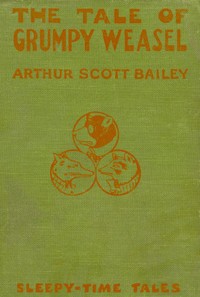
The Tale of Grumpy Weasel Sleepy-Time Tales — Key Ideas to Explore
Fairy Moral Tales
18,108 recorded words. 7 minutes difference from this book's estimate.
View Gutenberg source #24881
The source record for The Tale of Billy Woodchuck — A Closer Reading measures this digital text at 16,393 words, 1 hr 12 min estimated reading time, and 3 detected text sections.
The text analysis averages about 12.6 words per sentence, while the detected sections provide another way to judge how the source is divided.
Project Gutenberg metadata also associates the work with “Animals -- Juvenile fiction,” connecting these edition facts with the source record’s subject description.
Explore this collection
These alternatives are selected using recorded categories and estimated reading time.
About 79 minutes
Fairy Moral Tales
18,108 recorded words. 7 minutes difference from this book's estimate.
View Gutenberg source #24881About 199 minutes
Fairy Moral Tales
45,556 recorded words. 127 minutes difference from this book's estimate.
View Gutenberg source #25801About 199 minutes
Fairy Moral Tales
45,602 recorded words. 127 minutes difference from this book's estimate.
View Gutenberg source #33948Search stored excerpts and compare books → Choose by your preferences →
Choices use stored catalog measurements. Estimates vary with reading speed. A shared category is a catalog label, not a claim that two books have the same argument or literary quality.
Search reads excerpt text stored with this catalog and links to its associated Gutenberg record. The connection is stored in the site database; this tool does not recheck that every excerpt is word-for-word identical to that external record. Excerpt search does not cover every chapter and does not verify historical publication dates.
Catalog snapshot checked: 2026-09-26. Coverage: 93 public books, 93 available source excerpts.
Calculated from edition completeness, EPUB availability, text structure and catalogue metadata. Not a user rating.
Total of 100 points, scaled to a 2.5-5.0 range. Editions with an empty description or a missing EPUB file are not scored.
Public-domain source text
The source text is kept in the dedicated reader, separate from this catalogue record and its commentary.
The story begins not with Billy Woodchuck himself, but with a human boy, Johnnie Green, unknowingly tramping over the Woodchucks' buried bedroom in midwinter. This indirect introduction establishes the central tension between the animal world and the human farm that surrounds it. The narrative voice is gently omniscient, explaining that beneath three feet of snow and ground, Mr. and Mrs. Woodchuck lie asleep on a bed of dried grass, waiting for spring. Bailey uses this opening to set a seasonal rhythm: the woodchucks' hibernation ends when the snow melts and the sun shines, a cycle that frames the entire book.
The pasture where Billy lives is not a safe idyll. From the first chapter, the reader learns that in summer Johnnie Green is always on the watch for woodchucks, and that some years the Woodchucks have awakened too soon, forced to dig through snow-banks. This establishes a world where the animals' survival depends on timing and caution. The setting is specific: Farmer Green's pasture, the stonewall, the hollow stump, the broad brook. These landmarks recur throughout the excerpts, forming a geography of risk and refuge. Billy's home is underground, reached by a long tunnel, and his daily life involves constant vigilance—he keeps one eye on Mr. Fox and the other on a hole in the stonewall, ready to dive to safety.
Mr. Fox is the story's primary antagonist, and his method is manipulation through flattery. When he meets Billy in the woods, he praises him as "the best whistler in Pleasant Valley," a claim that immediately makes Billy proud and boastful. Mr. Fox then proposes a fife-and-drum corps, suggesting that Billy and his brothers hold sticks to their mouths and pretend to play fifes while whistling. The plan is transparently a trick—Mr. Fox wants to lead them into the woods where nobody can hear them, and he instructs Billy not to tell his mother, so they can surprise her. The excerpts show Billy's naivety: he agrees eagerly, never questioning why a fox would be so interested in music. The Grouse boys, famous drummers, are also recruited, and Mr. Fox chooses a secluded spot by a brook, avoiding old Mr. Crow's watchful eye.
The excerpts reveal Billy's voice through dialogue: he speaks with youthful confidence, throwing out his chest when praised, and admitting he can whistle but doesn't know a fife. The narrative style is direct and conversational, with frequent use of dashes and exclamations that mimic oral storytelling. However, the excerpts break off during the fife-and-drum corps scene, leaving the outcome of Mr. Fox's scheme unknown. The reader must infer from the chapter title, "Pop! Goes the Weasel!," that something goes wrong—perhaps a trap or a sudden escape. The later chapters listed in the contents, such as "Billy Brings the Doctor" and "The Family Escapes," suggest that Billy faces further adventures and dangers, but the excerpts do not confirm whether he learns to distrust Mr. Fox or remains gullible.
Three motifs recur in the excerpts: whistling, holes, and escape. Whistling is Billy's defining skill and the bait Mr. Fox uses. Holes are both home and haven—the Woodchucks' underground house, the hole in the stonewall, the hollow stump where Mr. Fox once tried to catch Billy. Escape is a constant necessity: Billy is always ready to dive into a hole, and the chapter titles hint at a family escape later. These motifs reinforce the theme of survival in a world where predators and humans are ever-present. Bailey's prose is economical, using repetition of these elements to build tension. For example, when Billy meets Mr. Fox, he watches with one eye on the fox and one on the hole—a detail that visually encapsulates the precarious balance of curiosity and caution.
Readers approaching The Tale of Billy Woodchuck for the first time should pay attention to how Bailey uses the seasons and the farm setting to create a consistent, believable animal world. The excerpts suggest that the story's drama lies not in grand adventures but in small, tense encounters where Billy's pride is exploited. The incomplete fife-and-drum corps scene is a good point to pause and consider what might happen next, based on the clues Bailey has planted: Mr. Fox's secrecy, the secluded location, and the chapter's title.
Years among these shelves taught me that Billy Woodchuck’s whistling bravado, that small defiance against Mr. Fox, carries a hidden weight—the same honest tremor I found later in A Voyage with Captain Dynamite — Themes and Context, where bravado wears a salt-stained coat and the sea keeps its own quiet score. Both whisper of courage measured not in noise, but in the pause before the next breath.
Build a private reading journal entry for this title.