About 199 minutes
The Girl Scouts in Beechwood Forest — Inside the Classic
Fairy Moral Tales
45,556 recorded words. 0 minutes difference from this book's estimate.
View Gutenberg source #25801
The catalog record for The Hollow Tree Snowed-In Book Being a continuation of stories about the Hollow Tree and Deep Woods people — Background and Themes provides practical reading context through 45,602 words, 3 hr 19 min estimated reading time, and 7 detected text sections.
The text analysis averages about 20.9 words per sentence, while the detected sections provide another way to judge how the source is divided.
Project Gutenberg metadata also associates the work with “Animals -- Juvenile fiction,” connecting these edition facts with the source record’s subject description.
Explore this collection
These alternatives are selected using recorded categories and estimated reading time.
About 199 minutes
Fairy Moral Tales
45,556 recorded words. 0 minutes difference from this book's estimate.
View Gutenberg source #25801About 207 minutes
Fairy Moral Tales
47,426 recorded words. 8 minutes difference from this book's estimate.
View Gutenberg source #24410About 214 minutes
Fairy Moral Tales
49,026 recorded words. 15 minutes difference from this book's estimate.
View Gutenberg source #24578Search stored excerpts and compare books → Choose by your preferences →
Choices use stored catalog measurements. Estimates vary with reading speed. A shared category is a catalog label, not a claim that two books have the same argument or literary quality.
Search reads excerpt text stored with this catalog and links to its associated Gutenberg record. The connection is stored in the site database; this tool does not recheck that every excerpt is word-for-word identical to that external record. Excerpt search does not cover every chapter and does not verify historical publication dates.
Catalog snapshot checked: 2026-09-26. Coverage: 93 public books, 93 available source excerpts.
Calculated from edition completeness, EPUB availability, text structure and catalogue metadata. Not a user rating.
Total of 100 points, scaled to a 2.5-5.0 range. Editions with an empty description or a missing EPUB file are not scored.
Public-domain source text
The source text is kept in the dedicated reader, separate from this catalogue record and its commentary.
Albert Bigelow Paine's The Hollow Tree Snowed-In Book opens with a map that orients readers to a whimsical geography: the top is south, a ladder marks where Mr. Dog landed, and the edge of the world is a spot where characters sit and dangle their feet. This cartographic playfulness sets the stage for a narrative voice that consistently blends domestic comfort with gentle absurdity. The author's diction favors repeated phrases such as "what pleasant work" and "not for him," creating a rhythmic, almost folkloric pattern in the stories. Dialogue among the animal characters—Mr. Robin, Mr. 'Possum, Mr. Squirrel—reveals their distinct personalities through their reactions to tales, with Mr. 'Possum often deflecting criticism by reframing others' motives. Paine's authorial choices in diction and dialogue establish a cozy yet subtly layered world where moral lessons emerge from repetition and character interplay.
Paine employs repetition not merely as a stylistic tic but as a structural anchor. In the story of the Fox who seeks pleasant work, the phrase "What pleasant work!" recurs each time the Fox observes a new animal—the Rabbit with bees, the Crow making pies, the 'Coon milking cows, the Cat fiddling. Each attempt ends with the Fox declaring the work unpleasant, followed by the observation that the other animal "seemed to enjoy it more than ever." This pattern builds a predictable rhythm that reinforces the moral: contentment lies in one's own tasks. The repetition also allows Paine to vary the consequences—a bee sting, burnt fingers, a kicked-over pail, a gunshot—while maintaining the same narrative beat. The effect is both humorous and didactic, as the listener (and reader) anticipates the Fox's disappointment. Mr. Squirrel later identifies the "moral lesson" explicitly, but the repetition has already driven the point home.
Paine differentiates his animal characters through their speech patterns and interpretive biases. After Mr. Robin tells the Fox story, Mr. 'Possum objects that the story "couldn't be true" because the animals would have persuaded the Fox to stay and do most of the work. Mr. Robin retorts that Mr. 'Possum "thought everybody was like himself" and that he already liked to do what he did best—"eat and sleep and let other people do the work." This exchange reveals character through dialogue: Mr. 'Possum's self-serving logic, Mr. Robin's pointed honesty, and the group's comfortable bickering. Mr. Rabbit then mediates, suggesting Mr. 'Possum should not take offense. The dialogue feels natural to a circle of friends, with each voice contributing to a shared social dynamic. Paine avoids generic animal talk; instead, each character's words reflect a consistent personality, making the parlor-room scenes feel lived-in.
The book embeds stories within a framing narrative: the Hollow Tree People gather and tell tales to one another. The opening pages establish that the stories were originally told to a "Little Lady" by the Story Teller, with illustrations by the Artist, and that time has passed—the Little Lady is now nearly grown, while the Story Teller and Artist remain ageless. This meta-fictional layer echoes the timelessness of the Hollow Tree world, where characters "remain always the same." Within the frame, Mr. Robin's tale of the Fox is followed by commentary from the listeners, blending the told story with the tellers' reactions. Paine thus creates a layered reading experience: the reader observes both the inner story and the outer conversation about it. This structure mirrors the cozy, oral tradition of the parlor-room, where stories are shared, debated, and enjoyed collectively.
Paine's word choice cultivates a tone of gentle absurdity grounded in domestic detail. The Fox puts on "his best clothes" before traveling; the Cow puts her foot in the milk-pail, upsetting it over the Fox's "nice new clothes." The consequences are mildly disastrous but never truly threatening—a bee sting, burnt fingers, a soiled outfit, a loud gunshot that is "not pleasant." The repeated phrase "not for him" underscores the Fox's self-centered perspective. Meanwhile, the narrator's interjections ("and of course it wasn't—not for him") create a conspiratorial intimacy with the reader. The map's explanation that "all the things are a good deal farther apart than they look" adds a deadpan humor to the world-building. This blend of precise, ordinary language and whimsical situations defines Paine's authorial voice, making the Deep Woods feel both fantastical and homelike.
Readers attentive to Paine's craft will notice how the repetition of phrases and the interplay of dialogue build a world that is both instructional and affectionate. The stories reward those who listen for the subtle differences in each character's voice and the way the frame narrative gently comments on storytelling itself. Approach the book as a collection of fireside tales where the telling matters as much as the tale.
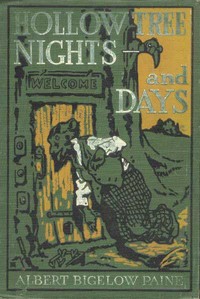
That rainy afternoon, the snowed-in animals’ repetitive comforts felt less like a flaw and more like a rhythm—each retelling a warm blanket. I kept thinking about how Paine’s nested stories slow time down, and afterward, almost without deciding, I reached for Hollow Tree Nights and Days — A Reader’s Guide, which simply sat beside me, quietly echoing that same unhurried hush.
A brief reflection can help important ideas stay with you longer.