About 161 minutes
Lisbeth Longfrock — Background and Themes
Childrens Adventures
36,858 recorded words. 5 minutes difference from this book's estimate.
View Gutenberg source #26348
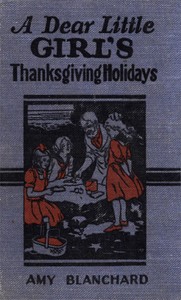
This digital edition of A Dear Little Girl's Thanksgiving Holidays — A Closer Reading is described by source-level measurements including 37,973 words, 2 hr 46 min estimated reading time, and 4 detected text sections.
The text analysis averages about 15.6 words per sentence, while the detected sections provide another way to judge how the source is divided.
Project Gutenberg metadata also associates the work with “Orphans -- Juvenile fiction,” connecting these edition facts with the source record’s subject description.
Explore this collection
These alternatives are selected using recorded categories and estimated reading time.
About 161 minutes
Childrens Adventures
36,858 recorded words. 5 minutes difference from this book's estimate.
View Gutenberg source #26348About 171 minutes
Childrens Adventures
39,151 recorded words. 5 minutes difference from this book's estimate.
View Gutenberg source #37927About 176 minutes
Childrens Adventures
40,385 recorded words. 10 minutes difference from this book's estimate.
View Gutenberg source #33383Search stored excerpts and compare books → Choose by your preferences →
Choices use stored catalog measurements. Estimates vary with reading speed. A shared category is a catalog label, not a claim that two books have the same argument or literary quality.
Search reads excerpt text stored with this catalog and links to its associated Gutenberg record. The connection is stored in the site database; this tool does not recheck that every excerpt is word-for-word identical to that external record. Excerpt search does not cover every chapter and does not verify historical publication dates.
Catalog snapshot checked: 2026-09-26. Coverage: 93 public books, 93 available source excerpts.
Calculated from edition completeness, EPUB availability, text structure and catalogue metadata. Not a user rating.
Total of 100 points, scaled to a 2.5-5.0 range. Editions with an empty description or a missing EPUB file are not scored.
Public-domain source text
The source text is kept in the dedicated reader, separate from this catalogue record and its commentary.
The catalog entry for A Dear Little Girl's Thanksgiving Holidays lists orphans as a subject, yet the excerpts show no orphaned character. Edna Conway, the protagonist, lives with both parents and siblings. The Thanksgiving invitation comes from her grandmother, not a charitable institution. Friendship and girls' adventures are more prominent: Edna's city-school routine, her teasing brother Charlie, and her new acquaintance Reliance, who confidently crosses a mill-pond beam to rescue a child. The holiday setting is a frame for these interactions rather than a thematic focus.
The opening chapter establishes Edna as a weekly boarder at school in the city, returning home on Fridays. Her mother receives a letter from grandma proposing “an old-fashioned Thanksgiving” at the farm. Edna’s excitement is immediate: she “danced off to hunt up her brothers.” The dialogue reveals a family with both parents present, contradicting the orphan subject tag. The invitation is framed as a possible last gathering because grandparents are aging, not due to any tragedy. Edna’s brother Charlie teases her with absurd guesses about the news, showing a typical sibling dynamic. The catalog subject “orphans” does not appear in the text; instead, the story centers on a stable, extended family.
The mill pond scene offers the most vivid description: “a grey stone structure in a little nest of trees” with “Black Creek” flowing to join the river. Reliance points out the mill wheel is still, deducing the miller is absent. Edna admires the spot and asks about summer picnics. The crossing beam—a “heavy beam which stretched from shore to shore”—is a specific physical detail that creates tension. Edna’s fear of dizziness and the water contrasts with Reliance’s competence. This setting is not generic; it is a working mill with a pond, dam, and sluice. The catalog subject “Thanksgiving Day” is barely mentioned after the first chapter; the holiday serves as a plot device, not a descriptive focus.
Dialogue reveals character quickly. Edna’s mother speaks in measured, informative sentences: “I think perhaps you and I will go on a day or two ahead.” Charlie’s replies are sarcastic: “The Dutch have taken Holland.” Reliance, a local girl, is observant and brave: she knows the mill’s schedule and volunteers to cross the beam. Edna’s fear is explicit: “Oh, how can you? I wouldn’t dare.” The rescue attempt involves Reliance guiding Edna step by step: “you can put your arms around my waist.” The friendship between the two girls is the emotional core, not any orphan plot. The catalog subject “Friendship” is accurate, but the excerpts show it developing through shared risk, not through a formal friendship theme.
Readers should note that the catalog subjects may mislead: the story is not about orphans, and Thanksgiving is a backdrop rather than a theme. The excerpts show a domestic adventure with strong sensory details of place and believable child dialogue. The mill pond episode, with its precise description of the beam and water, is the most memorable scene. Approach the book as a period piece about a girl’s holiday visit to her grandparents’ farm, where local friendships and small crises take precedence over holiday sentiment.
Sometimes the quietest holiday tale leaves a lingering warmth, much like the steady friendship Edna finds among her cousins. A similar trust grows between a determined girl and a puzzling horse in Penny Nichols and the Black Imp — Inside the Classic. Both books share a gentle patience with unlikely companions, a kindness that asks nothing more than to be observed.
Build a private reading journal entry for this title.