About 255 minutes
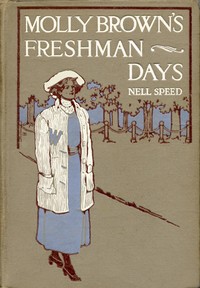
Molly Brown's Freshman Days — Themes and Context
Young Readers
58,571 recorded words. 22 minutes difference from this book's estimate.
View Gutenberg source #36684
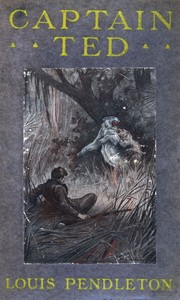
Captain Ted: A Boy's Adventures Among Hiding Slackers in the Great Georgia Swamp — Context and Discussion can be approached with a clearer sense of reading commitment from its source measurements: 63,499 words, 4 hr 37 min estimated reading time, and 6 detected text sections.
The text analysis averages about 19.4 words per sentence, while the detected sections provide another way to judge how the source is divided.
Project Gutenberg metadata also associates the work with “Boy Scouts -- Juvenile fiction,” connecting these edition facts with the source record’s subject description.
Explore this collection
These alternatives are selected using recorded categories and estimated reading time.
About 255 minutes
Young Readers
58,571 recorded words. 22 minutes difference from this book's estimate.
View Gutenberg source #36684About 255 minutes
Young Readers
58,625 recorded words. 22 minutes difference from this book's estimate.
View Gutenberg source #36736About 313 minutes
Young Readers
71,820 recorded words. 36 minutes difference from this book's estimate.
View Gutenberg source #28741Search stored excerpts and compare books → Choose by your preferences →
Choices use stored catalog measurements. Estimates vary with reading speed. A shared category is a catalog label, not a claim that two books have the same argument or literary quality.
Search reads excerpt text stored with this catalog and links to its associated Gutenberg record. The connection is stored in the site database; this tool does not recheck that every excerpt is word-for-word identical to that external record. Excerpt search does not cover every chapter and does not verify historical publication dates.
Catalog snapshot checked: 2026-09-26. Coverage: 93 public books, 93 available source excerpts.
Calculated from edition completeness, EPUB availability, text structure and catalogue metadata. Not a user rating.
Total of 100 points, scaled to a 2.5-5.0 range. Editions with an empty description or a missing EPUB file are not scored.
Public-domain source text
The source text is kept in the dedicated reader, separate from this catalogue record and its commentary.
From its opening sentence, Captain Ted establishes a brisk, declarative voice that mirrors the protagonist's own resolve. The narrative moves quickly through the snowy North Carolina landscape, then plunges into the Okefenokee Swamp, where the pace becomes more deliberate, weighted by the tension of hiding slackers. Pendleton alternates between action sequences—escapes, hand-to-hand combat—and quieter, strategic conversations, notably between Ted and the enslaved character July, whose dialect and cautious advice slow the rhythm and deepen the stakes.
Pendleton differentiates characters sharply through speech. Ted’s language is direct and earnest, as when he declares, “If—if I thought he would go to the war willingly, I—I could give him up.” July’s dialect is rendered phonetically, with phrases like “You sho is a cap'n” and “Hit won't do; hit won't begin to do.” This contrast not only marks social hierarchy but also conveys July’s practical wisdom against Ted’s idealism. The slackers’ rough, evasive talk further underscores the moral divide. The narrator’s own voice remains formal and slightly archaic, using constructions like “the boy crept to the door in the floor” and “a sudden heart-sinking.”
The first chapter opens with a leisurely Christmas-tree hunt, the prose unhurried, describing snow, sled, and hatchet. But once the scene shifts to the swamp, the pace accelerates into a series of crises: the cub’s escape, the departure of protective adults, and the looming threat of the slackers. Pendleton uses short paragraphs and rapid dialogue to heighten urgency, as in July’s warning: “Dem three treats me de bes' of all of 'em in dis camp, an' dey's yo' bes' friends, too.” Later, action sequences—like the hand-to-hand combat—are rendered in clipped, cinematic sentences. The rhythm mirrors Ted’s own shift from boyish adventure to serious responsibility.
Several motifs recur: the turkey pen as a site of both sustenance and tension; the phrase “Cap'n Ted” as a marker of respect and burden; and the repeated motif of doors—the floor door through which Ted frees the cub, the camp’s precarious boundaries. Pendleton also structures the narrative around departures and returns: Mr. Hardy leaves, then others, each absence raising the stakes. The swamp itself functions as a pressure chamber, isolating the characters and forcing decisions. These patterns give the novel a cohesive, almost mechanical rhythm, where each element—dialect, setting, pace—serves the central conflict between duty and survival.
Readers attentive to shifts in tempo will notice how Pendleton uses the swamp’s oppressive stillness to counterpoint bursts of action. The dialogue, especially July’s, rewards close listening for its layered warnings. Approach the novel as a hybrid: part boy-scout manual, part wartime propaganda, with a narrative voice that grows more urgent as Ted’s predicament deepens.
Reading about Captain Ted drifting through the Okefenokee, I remembered how the swamp’s quiet patience felt almost like the lake in The Outdoor Chums on the Lake; Or, Lively Adventures on Wildcat Island — Themes and Context—both hold boys suspended between duty and wonder. That old tug, the weight of being watched while wanting to vanish, stays with me longer than any plot.
Create a short personal record of your experience with this book.