About 241 minutes
Girls of Highland Hall: Further Adventures of the Dandelion Cottagers — Inside the Classic
Young Readers
55,205 recorded words. 0 minutes difference from this book's estimate.
View Gutenberg source #40403
This digital edition of The Meadow-Brook Girls Across Country; Or, The Young Pathfinders on a Summer Hike — A Closer Reading is described by source-level measurements including 55,372 words, 4 hr 1 min estimated reading time, and 6 detected text sections.
The text analysis averages about 11.6 words per sentence, while the detected sections provide another way to judge how the source is divided.
Project Gutenberg metadata also associates the work with “Hiking -- Juvenile fiction,” connecting these edition facts with the source record’s subject description.
Explore this collection
These alternatives are selected using recorded categories and estimated reading time.
About 241 minutes
Young Readers
55,205 recorded words. 0 minutes difference from this book's estimate.
View Gutenberg source #40403About 233 minutes
Young Readers
53,541 recorded words. 8 minutes difference from this book's estimate.
View Gutenberg source #37486About 255 minutes
Young Readers
58,571 recorded words. 14 minutes difference from this book's estimate.
View Gutenberg source #36684Search stored excerpts and compare books → Choose by your preferences →
Choices use stored catalog measurements. Estimates vary with reading speed. A shared category is a catalog label, not a claim that two books have the same argument or literary quality.
Search reads excerpt text stored with this catalog and links to its associated Gutenberg record. The connection is stored in the site database; this tool does not recheck that every excerpt is word-for-word identical to that external record. Excerpt search does not cover every chapter and does not verify historical publication dates.
Catalog snapshot checked: 2026-09-26. Coverage: 93 public books, 93 available source excerpts.
Calculated from edition completeness, EPUB availability, text structure and catalogue metadata. Not a user rating.
Total of 100 points, scaled to a 2.5-5.0 range. Editions with an empty description or a missing EPUB file are not scored.
Public-domain source text
The source text is kept in the dedicated reader, separate from this catalogue record and its commentary.
The Meadow-Brook Girls set out on a summer hike that quickly becomes a contest of wits and endurance. In the opening chapter, the group realizes they are lost, and Harriet Burrell calmly spreads a map on the ground to retrace their route. The guardian, Miss Elting, urges calm, but the girls' anxiety is palpable—Grace Thompson wails, Hazel Holland gasps. The tension between order and disorder is established from the start.
Later, the Tramp Club, a rival group of boys, vows to catch up after the girls outsmart them by smothering their campfire with a damp blanket. The boys' captain declares, 'Are we going to let a lot of girls get the best of us?' This sets up a pattern of strategic one-upmanship that runs through the excerpts.
The excerpts repeatedly emphasize navigation and misdirection. When the girls realize they are lost, Harriet produces a map and traces their route, but the landmarks don't match—'There is no village anywhere near us,' she says. The map becomes a symbol of control in an uncertain environment. Later, the Tramp Club tries to track the girls but finds no footprints, concluding that the girls 'have been following the side of the road, so we wouldn’t be able to pick up the trail.' The girls' knowledge of trailing is acknowledged by their rivals: 'They’re sharp ones. They know something about trailing.'
This focus on mapping and tracking is not just practical; it reflects a broader theme of agency. The girls are not passive victims of the landscape but active interpreters of it. Harriet's map-reading contrasts with the boys' reliance on brute force and speed. The excerpts suggest that the story rewards careful observation over mere determination.
One of the most vivid episodes involves Jane McCarthy, nicknamed 'Crazy Jane,' who drives a car at reckless speed, honking and yelling 'hoo-e-e-e' from inside a cloud of dust. The Tramp Club attempts to block the road, but Jane does not slow down; the boys barely jump aside in time. The car 'careening from side to side' and Jane's hair 'standing out almost straight behind her' create a chaotic, almost cartoonish image.
Jane's role is ambiguous: she is both a threat and a comic figure. The boys call her 'that Miss McCarthy' and blame her for the scare, but they also recognize she 'knew we would get out of the way.' Later, she stops to make chalk marks on a fence, hinting at a mysterious purpose. The excerpts do not reveal her full intentions, but her presence injects unpredictability into the hike, challenging both the girls and the boys to adapt.
The girls' approach to conflict is marked by cleverness rather than confrontation. When the Tramp Club complains about the smothered fire, one boy defends the girls: 'You know Miss Burrell... said strategy wasn’t barred. This isn’t a trick, it’s strategy.' This distinction is central to the story's moral framework. The girls use their wits to gain an advantage, but they do so within an agreed-upon set of rules.
Harriet's leadership is evident in her calm problem-solving. She does not panic when lost, and she plans ahead. The excerpts show the girls traveling 'at a fast pace' after crossing a rugged range of hills, sustaining 'scratches on their hands and several rents in their frocks.' They endure physical hardship without complaint, focusing on the goal. The Tramp Club, by contrast, is reactive and easily frustrated. The girls' resourcefulness is not just about winning; it is about maintaining composure under pressure.
Readers should pay attention to the recurring motif of marks and signs—chalk on fences, maps, trails—as the girls and their rivals navigate both the landscape and each other. The excerpts offer a glimpse of a story where competence and cleverness are valued over brute strength, and where the line between play and peril is thin. The incomplete nature of the excerpts leaves many questions open, but the patterns of observation and strategy are clear from the start.
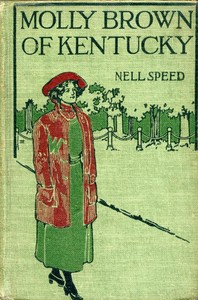
There’s a certain steadiness in watching Harriet read her map against a lost trail, a quiet faith that patience untangles woods. That same sturdy warmth lingers in Molly Brown of Kentucky, where a girl faces her own crooked roads with a lantern of kindness. They’d have understood each other, those two, across the years. Molly Brown of Kentucky — Story, Setting & Ideas holds that same homely glow, like a fire kept for company.
Use these questions to collect your thoughts before moving on.