About 179 minutes
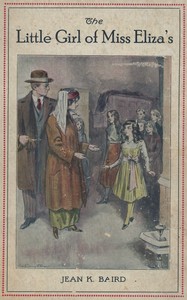
That Little Girl of Miss Eliza's: A Story for Young People — Background and Themes
Young Readers
41,054 recorded words. 9 minutes difference from this book's estimate.
View Gutenberg source #35822

For The Auto Boys' Mystery — Reading Companion, the stored edition analysis reports 43,058 words, 3 hr 8 min estimated reading time, and 4 detected text sections.
The text analysis averages about 16.1 words per sentence, while the detected sections provide another way to judge how the source is divided.
Project Gutenberg metadata also associates the work with “Automobiles -- Juvenile fiction,” connecting these edition facts with the source record’s subject description.
Explore this collection
These alternatives are selected using recorded categories and estimated reading time.
About 179 minutes
Young Readers
41,054 recorded words. 9 minutes difference from this book's estimate.
View Gutenberg source #35822About 233 minutes
Young Readers
53,541 recorded words. 45 minutes difference from this book's estimate.
View Gutenberg source #37486About 241 minutes
Young Readers
55,372 recorded words. 53 minutes difference from this book's estimate.
View Gutenberg source #36391Search stored excerpts and compare books → Choose by your preferences →
Choices use stored catalog measurements. Estimates vary with reading speed. A shared category is a catalog label, not a claim that two books have the same argument or literary quality.
Search reads excerpt text stored with this catalog and links to its associated Gutenberg record. The connection is stored in the site database; this tool does not recheck that every excerpt is word-for-word identical to that external record. Excerpt search does not cover every chapter and does not verify historical publication dates.
Catalog snapshot checked: 2026-09-26. Coverage: 93 public books, 93 available source excerpts.
Calculated from edition completeness, EPUB availability, text structure and catalogue metadata. Not a user rating.
Total of 100 points, scaled to a 2.5-5.0 range. Editions with an empty description or a missing EPUB file are not scored.
Public-domain source text
The source text is kept in the dedicated reader, separate from this catalogue record and its commentary.
The story opens with the Auto Boys—Phil Way, Billy Worth, Dave MacLester, and Paul Jones—already settled on the unfrequented shore of Opal Lake, deep in northern woods. Their summer outing, initially focused on hunting and fishing, is disrupted by signs of life at a nearby abandoned clubhouse. Paul’s cautious reconnaissance reveals voices inside, hinting at a hidden satchel of twenty thousand dollars stolen three years earlier. The narrative quickly establishes a pattern of movement between the camp, the clubhouse, and the surrounding forest, with the automobile serving as both a means of exploration and, later, a lifeline.
The geography of the story is built around three key locations: the boys’ camp on the lake, the deserted Longknives Club clubhouse on a nearby point, and the clearing where Nels Anderson, the unpaid Swedish foreman, lives with his family. The narrative moves frequently between these points, often by foot along a gravel road or by automobile. The clubhouse, though abandoned, becomes a focal point of mystery—Paul enters through a cellar window, hears voices, and later encounters a stranger who vanishes with “strange and savage oaths.” The trail to Staretta, the nearest town, is mentioned but never fully traversed in the excerpts, keeping the action contained within this small, tense geography.
The car, referred to as “the Thirty,” is central to the plot. It is used for reconnaissance and, in the climax, for a desperate rescue. When the forest fire threatens, Phil drives “in a way he had never done before” to reach the Andersons’ clearing. Yet the car is also vulnerable: the boys must push it into the lake to save it from the flames, acknowledging that “water won’t put it out of business permanently.” This dual role—as a tool of mobility and an object of risk—reflects the era’s fascination with automobiles as both liberating and fragile machines. The car’s “staunch gears” are praised, but its limitations are equally clear.
The forest fire is described with sensory intensity: “the roar and crackle and all the dreadful noise of the ocean of flame.” It is not a static backdrop but an active agent that transforms the landscape. The fire spreads faster than the characters can react, rendering Anderson’s efforts to burn a firebreak useless. The flames “flood the woods to the west,” and falling embers ignite the haystack and roof. The cow’s “low, frightened bellowing” and the little girl’s cry for “poor, good bossy” add a layer of pathos. The fire forces a shift from mystery-solving to survival, compressing the group into the car and then onto a raft.
The climax involves a two-part escape: first by car to the lake, then by raft. Phil orders the raft enlarged to carry eight people, including the Andersons and a “golfing man.” The raft becomes a temporary refuge, but the excerpts end before the crossing is complete. The automobile, submerged in the lake, is left behind. This incomplete journey—the raft launched, the far shore not yet reached—leaves the resolution open. The boys’ resourcefulness is evident, but the fate of the satchel, the stranger, and the car remains unknown from the provided text, underscoring the serial nature of the Auto Boys series.
Readers should pay attention to how the story balances two distinct threats: the hidden satchel and the forest fire. The mystery of the stolen money, introduced early, recedes during the fire sequence, only to potentially resurface later. The automobile, a symbol of modern adventure, is both hero and casualty. The excerpts suggest a narrative that values quick thinking and teamwork over elaborate detection, making this a fast-paced entry in early juvenile fiction.
That abandoned clubhouse in the woods—the way it held secrets while the boys circled it—stuck with me long after. It reminded me of another quiet story about girls walking summer roads, carrying their own unspoken weight. The Meadow-Brook Girls Across Country; Or, The Young Pathfinders on a Summer Hike — A Closer Reading lingers the same way, not loud, just present.
Create a short personal record of your experience with this book.