About 255 minutes
Molly Brown of Kentucky — Story, Setting & Ideas
Young Readers
58,625 recorded words. 0 minutes difference from this book's estimate.
View Gutenberg source #36736
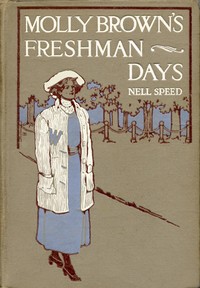
For Molly Brown's Freshman Days — Themes and Context, the stored edition analysis reports 58,571 words, 4 hr 15 min estimated reading time, and 7 detected text sections.
The text analysis averages about 15.8 words per sentence, while the detected sections provide another way to judge how the source is divided.
Project Gutenberg metadata also associates the work with “College stories,” connecting these edition facts with the source record’s subject description.
Explore this collection
These alternatives are selected using recorded categories and estimated reading time.
About 255 minutes
Young Readers
58,625 recorded words. 0 minutes difference from this book's estimate.
View Gutenberg source #36736About 241 minutes
Young Readers
55,372 recorded words. 14 minutes difference from this book's estimate.
View Gutenberg source #36391About 241 minutes
Young Readers
55,205 recorded words. 14 minutes difference from this book's estimate.
View Gutenberg source #40403Search stored excerpts and compare books → Choose by your preferences →
Choices use stored catalog measurements. Estimates vary with reading speed. A shared category is a catalog label, not a claim that two books have the same argument or literary quality.
Search reads excerpt text stored with this catalog and links to its associated Gutenberg record. The connection is stored in the site database; this tool does not recheck that every excerpt is word-for-word identical to that external record. Excerpt search does not cover every chapter and does not verify historical publication dates.
Catalog snapshot checked: 2026-09-26. Coverage: 93 public books, 93 available source excerpts.
Calculated from edition completeness, EPUB availability, text structure and catalogue metadata. Not a user rating.
Total of 100 points, scaled to a 2.5-5.0 range. Editions with an empty description or a missing EPUB file are not scored.
Public-domain source text
The source text is kept in the dedicated reader, separate from this catalogue record and its commentary.
The novel opens at a train station where a conductor calls out “Wellington! Wellington!” and a stream of girls pours from the coaches. Among them is Molly Brown, a tall girl with auburn hair and deep blue eyes, wearing a shabby brown homespun suit and an old felt hat. A burnt-orange silk tie at her neck draws attention away from the worn seams, signaling a character who is both self-aware and determined to make her mark. The scene immediately establishes a campus teeming with young women in sweaters embroidered with a large “W” in cadet blue—the “mystic color of Wellington University.”
Speed’s prose focuses on the collective energy of the freshman class rather than on individual interiority. The baggage master, Mr. Murphy, good-naturedly manages the chaos, and Molly’s first words—“I think my trunk is on this train”—are practical and understated. The opening thus grounds the story in the physical details of arrival: the stucco station, the gravel walk, the omnibuses, and the bicycles. This is a world where belonging is signaled by a sweater emblem, and where a girl’s entrance is measured by her clothes and her composure.
In the excerpted chapters, Molly and her new friends form a club they call the G.F. Society. The name is chosen after a discussion in which Mabel Hinton explains that a goldfish “always radiates a cheerful glow no matter where he is” and “swims just as happily in a finger bowl as he does in a fish pond.” The club’s object is “the promotion of kindliness, especially toward such people as Frances Andrews, who were friendless.” Judy rephrases this: “instead of looking after wounded and hurt people, we’ll look after wounded and hurt feelings.”
The society is secret, with weekly reports and a plan to give an entertainment. Margaret, described as “astute,” guides the business-like proceedings, and the girls feel “quite important.” The narrator notes that this is “the first society to be established that year in the freshman class” and that it “developed afterward into a very important organization.” The club’s founding reveals a central tension in the book: the desire for social structure versus the impulse toward genuine kindness. The G.F. Society is both a playful secret society and a serious attempt to address loneliness.
Speed renders the girls’ conversations in a colloquial, slightly formal register that mixes earnestness with humor. When Jessie tells a story about “The Friends of the Wallflowers”—a group of men who gave a cross-eyed, ugly girl “the time of her life”—Nance, who “imagined that she was a wallflower,” reacts with self-consciousness. The dialogue is peppered with interruptions and asides: “Girl or man?” demands Judy when Jessie mentions a letter from a cousin. “Man,” answers Jessie, blushing. The group laughs because “Jessie’s beaux were numerous.”
These exchanges show a social hierarchy based on confidence and romantic experience. Molly herself is not the center of attention; she asks for a compliment that has been “passed along considerably” and receives it with a warning about an “electric shock.” The compliment travels through a chain of acquaintances—a cousin’s best friend’s sister—before reaching Molly. This circuitous route mirrors the way reputation and affection circulate in a closed community. The girls are acutely aware of who is popular, who is friendless, and how to navigate the unwritten rules of campus life.
The Wellington campus is described through its visual markers: the “pretty stucco station with its sloping red roof,” the “University drive,” and the omnibuses. Girls appear “leaping from omnibuses; hurrying down the gravel walk; hastening along the University drive.” The uniform of the day includes sweaters and “short walking skirts of white duck or serge,” with the cadet-blue “W” embroidered across the front. This attention to clothing extends to Molly’s own outfit: a shabby brown homespun suit, an old brown felt hat, and a burnt-orange tie that “seemed to draw attention away from the shiny seams and frayed hem.”
The tie functions as a character detail—a deliberate choice that “cries aloud: ‘Look at me. I am the color of a winter sunset.’” Speed uses material objects to signal personality and social standing. The trunk that Molly worries about, the baggage master’s reassurances, and the mention of “all the baggage left over by the 9.45” root the story in the logistics of student life. These details, combined with the club’s formal voting procedures and the mention of a “Kentucky Spread” in the table of contents, suggest a world where friendship is both spontaneous and organized, and where belonging is negotiated through objects, rituals, and shared stories.
Readers approaching Molly Brown’s Freshman Days should attend to the way Speed balances the public rituals of college life—club meetings, train arrivals, sweater insignia—with the private anxieties of fitting in. The G.F. Society’s mission to protect “wounded and hurt feelings” is a clue to the book’s emotional core, even as the narrative remains focused on external action and dialogue. The excerpts do not reveal whether Molly herself is a wallflower or a leader, but they do show a community in the process of defining itself through shared projects and small kindnesses.
Reading about Molly’s secret society, I remembered how my own freshman roommate and I once whispered a pledge under our dorm’s porch light, promising to be gentler to everyone. That feeling returned when I found Girls of Highland Hall: Further Adventures of the Dandelion Cottagers — Inside the Classic, whose halls held the same hushed, hopeful warmth.
A brief reflection can help important ideas stay with you longer.